A story of relentless abuse (2018)
*this text was awarded the Best departmental Thesis at the School of Visual Arts, in New York City (class of 2018)
Objectification and idealisation of the female body have often been a subject of feminist art criticism. The importance of our time to re-define and overthrow the “male gaze”[1] in a still phallocentric society is hence unquestionable. As a result, self-knowledge and awareness of the issue mentioned above are essential focal points to access and conceive the female authorship needed, especially in the process of this re-definition. Any theatrical glorification or a sexual sensation of the body, interpreted in the project is not deliberate. On the contrary, it is put aside and purposely ignored. If a spectator chooses - consciously or not - to devour a bait of the body in sexual means, heightens the importance of artists to elaborate on the female body. Art is an ongoing journey; it is a journey where political and cultural realities demand facing, and universal truths need to be explored and expressed in a tangible form. The pictorial imagery of war and abuse of the female body and beyond can remind us how vital freedom is in our fragile reality.
I am interested in the abuse of women regardless of their background. I am interested in breaking the boundaries of silence for the marginalised section of society. I constitute a terrifying presence beyond any functionalities and conventionalities to transform the female body into a psychological complexity that reflects the horrendous reality of abuse. Being highly critical of various events occurring globally, I begin with a vantage point to understand that women were and still are victims and spoils of war for the victorious armies. An army, in this case, is used as a literal or even a metaphorical entity. I seek to parallel the definition of armies with any form of abuse – whether it originates from war-zones or domestic households. Hence, the notion of war is an allegorical notion of torture. Rape is a form of abuse which should be seen as a cruel, but also an unavoidable consequence of this war/torture.
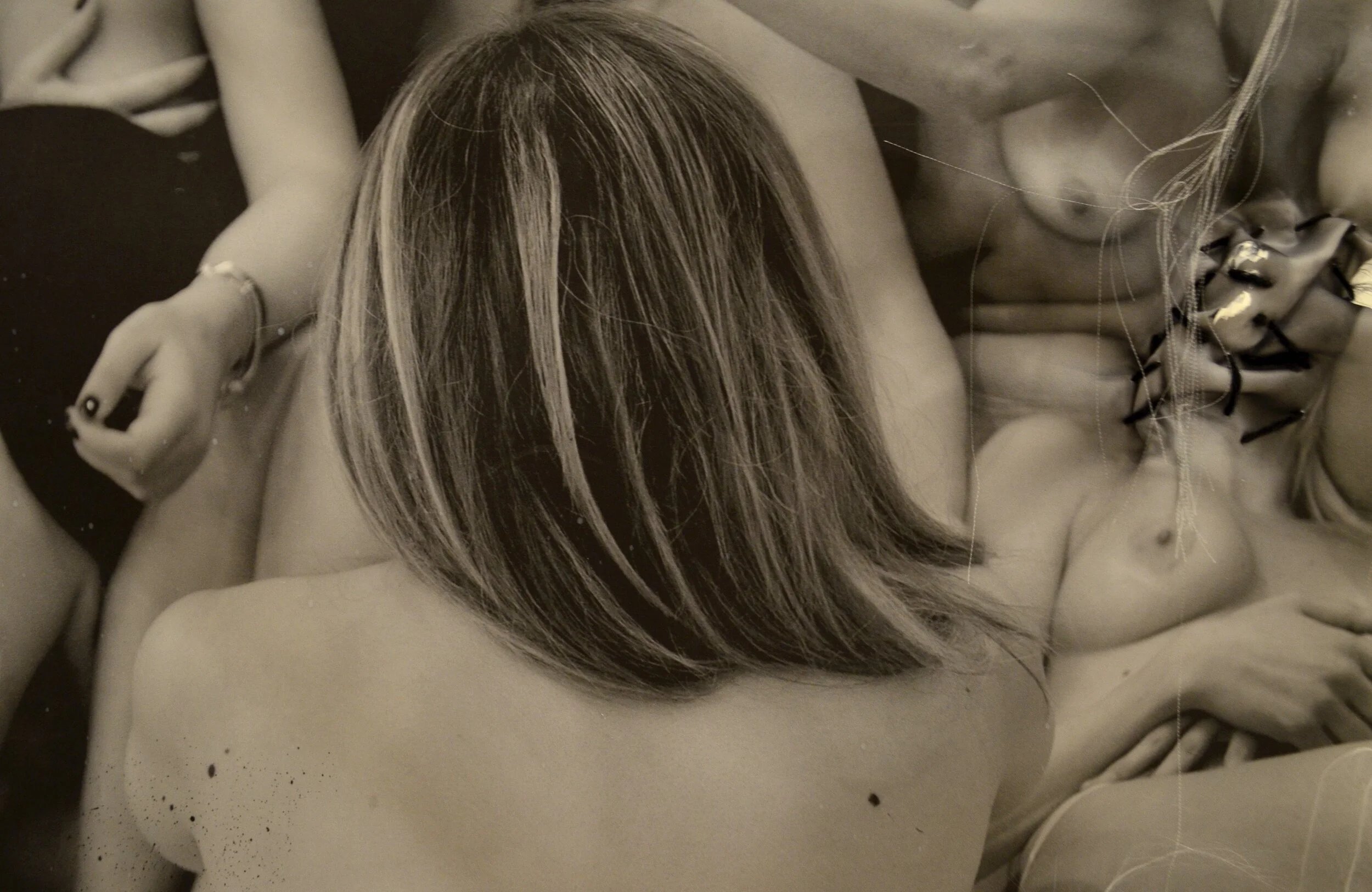
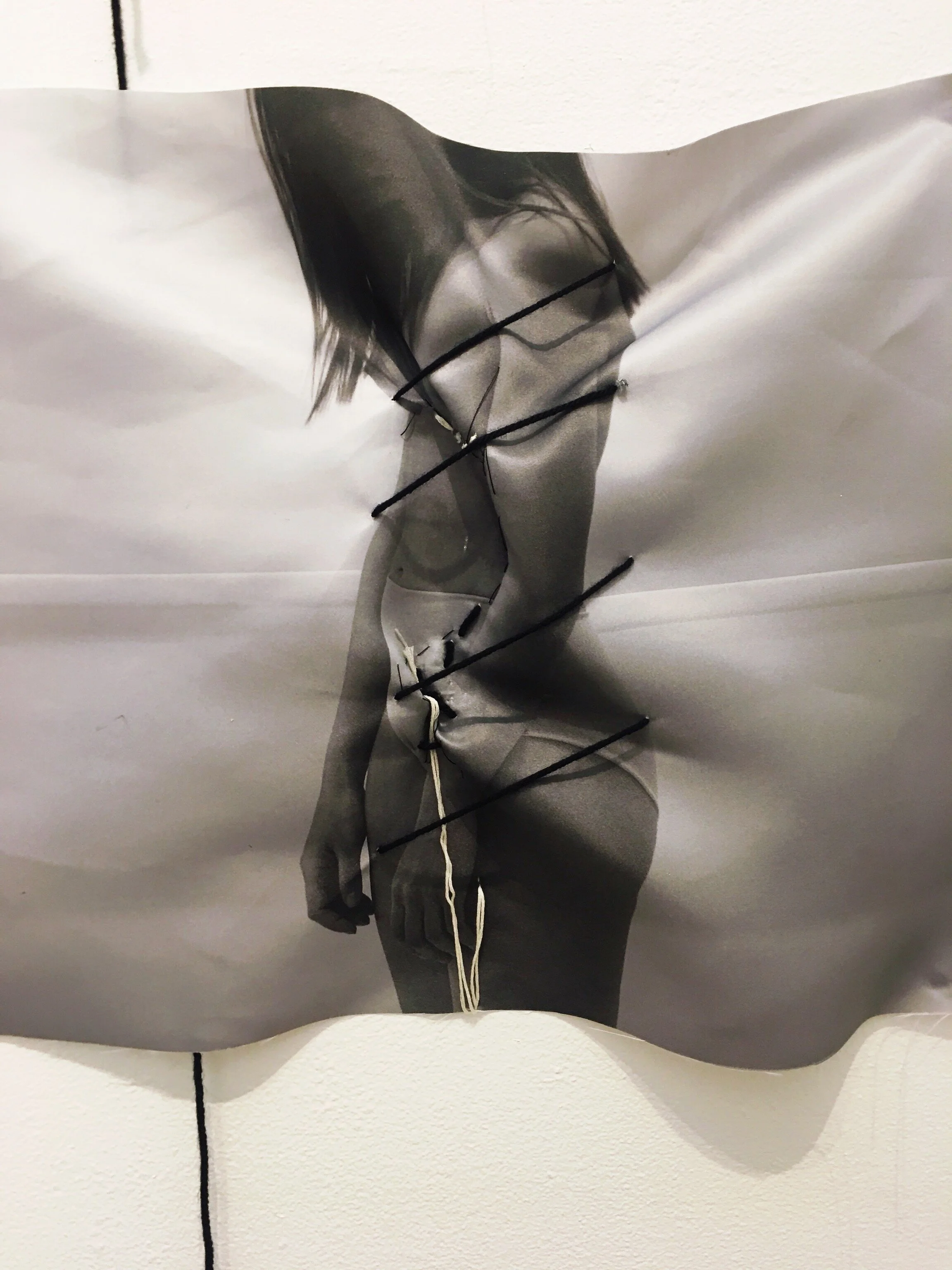
With additive and subtractive processes that portray elements of urgency in the explorations of suffering in all forms, I pursue to explore the psychological and mental abuse of women in domestic households and war-zones. I am interested in the reduction of forms to represent the psychology of the crowd and the complexities of the figure and the face. I base the themes of my work on personal experiences and memoirs of the deprivation of life in a very literal and metaphorical manner. The central concept is that abuse can lead to the notion of captivating women as prisoners in their bodies. Real-life photographs allow the viewer to contextualize themselves into a visual narrative of the real and human female body. I narrow down the personas of the photographs into a relentless journey of a torturous system of the subordination of women. Through this, I seek to abolish and even overthrow the “to-be-looked-at-ness” idea of the female body, which is often cited for serving pleasure, glorification, and sexual sensation. Thus, intervening with embroidery on the photographs is one of the main features of this project.
The paintings evoked in this project are in conversation with the photographs, often inspired by the sitters, or by the setting of the image. In a painterly manner, I seek to create a level of aggression in the figure to contribute to the information process of the people involved in abuse. In other words, I aim to create a visual history with an on-going narrative by drawing connections to what is going on in the world. Undoubtedly, the modern world offers us the instruments of photography; hence I use photography to my benefit in creating this on-going narrative of abuse. The sculptural, haptic, and gestural figures are intended to create a horrific reality of the subject matter with immersive purposes. The duality between the physical touch and visual observation of my practice classifies an important sarcastic subtext of the entire series. What appears to be haptic, does not necessarily mean that it should or it could be touched—generalizing the notion of the haptic versus the optic I create my concept of tactility in the project mostly to call upon a reclaiming of the female body from the consequence of abuse. I do not depict the female body in terms of beauty or idealization—quite the opposite. The female body is emerged and described outside the depiction of a woman’s identity to maintain a subjectivity that is not objectified through a specific identity. I seek to distinguish the female body between its domestic and public sphere. As a result, in this project, the female body is repositioned in direct relation to universality beyond specific visual clues with the face. Tactility allows the narrative descriptions to be constructed at the moment, outside any preoccupations or prejudices.
All of my work could be translated into political and personal interpretations. I am a Cyprus bred artist, where the issues of conflict and segregation are still prominent. Thus, it is only natural that my practice revolves around issues that are projecting and impacting our everyday lives – one way or another. I am born and bred in an environment where ignorance is not bliss. As a result, I owe it to my history to present unrelenting, eloquent, and provocative explorations of the construction of the contemporary world, with its political, economic, and social implications. Conclusively, my current project draws encouragement from many different artists and writers. Anselm Kiefer, in terms of the materials, has given me a particular understanding of the perception of how ordinary things can be explored to create an unconventional surface and create a spatial inventiveness of my concept of haptic. As a result, his roots being a post-World War 2 artist, have enabled me to visualize my work in a political context. Leon Golub has worked efficiently in allowing me to understand the specificity needed in my figurative paintings. Lucian Freud was the catalyst in my understanding of portraiture and the obligation of the artist while executing the figure. Through his autobiography (the self-portraits series), I have come to understand the importance of a narrative in art-making. Cindy Sherman, a prominent photographer, has introduced me to the feminist struggle of overthrowing the male gaze with specific iconographies in her work. About Sherman, I cannot neglect the impact on my work by the famous art critic Hal Foster in the article “Obscene, Abject, Traumatic” (1996). By analyzing Sherman’s work, Foster introduced me to the critical correlation of psychology and feminism: “female subjects [are] self-surveyed, not in phenomenological reflexivity, …but in psychological estrangement.”[2] Therefore, speculating my influences, there is one vital point to be made: the language and subject matter of my project are constructed by narratives that are psychologically, socially, historically, and politically registered in histories and contemporary cultures.
With respect to the survivors of mental and physical abuse, it is with a great delicacy that I wish to bring forward a matter as such. No one drives solo on this journey - whether you are a man or a woman. Torment, agony, and struggle are two-fold, whether you are a victim or the third-person looking outside the window.
[1] The term male gaze was coined by Laura Mulvey, a feminist film critic in 1975; it describes how women are viewed and how each shot of a woman in the film was from the viewpoint of the male director. Female appearances, therefore, are driven by male desires and directives
[2] Foster Hal, “Obscene, Abject, Traumatic,” October 78 (1996), p. 110