Who Gets to Belong? /// Jason Arday and the Ethics of Punishment
A few weeks ago, if you had searched for Jason Arday, you would have seen a story of remarkable success. A professor of Sociology of Education at the University of Cambridge. Appointed in 2023, aged 37, he instantly became known as one of the few Black person to hold a professorship at the university. His biography was something we (as young wannabe academics) see and admire. He, himself, had spoken publicly about being autistic and non-verbal as a child, learning to read and write relatively late, before eventually reaching one of the most prestigious universities in the world.
It was the kind of story institutions like Cambridge understandably like to tell. Or sell. Here was evidence, seemingly, that the doors of one of Britain’s oldest elite institutions could open to somebody whose path looked very different from the traditional image of a Cambridge professor.
Then things changed.
There were serious allegations emerging concerning plagiarism in Arday’s doctoral thesis and published research. Other claims he had made about his academic, athletic and personal history were questioned. Journalists began investigating his biography. Former schoolmates were contacted. There was public outcry. His publications and CV were scrutinised. Cambridge came under increasing pressure over how he had been recruited.
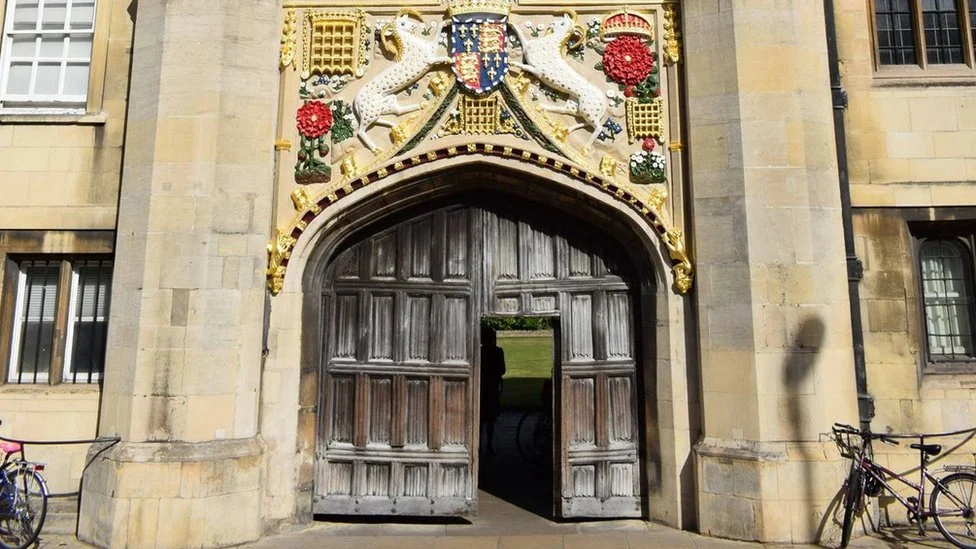
Arday denied plagiarism but eventually resigned from Cambridge. The university subsequently announced an independent investigation into the circumstances surrounding his appointment.
On 14 August 2026, Jason Arday was found dead at his home in south London. He was 41. Police described his death as unexpected but not suspicious. I am writing this on the 15th of August 2026, and we still have no confirmed cause of death.
The simplistic side of this story is that an academic appears to have repeatedly misrepresented aspects of his biography, serious questions were raised about his research, with journalists exposing such inconsistencies, and an institution apparently failing to identify them before appointing him. I don’t intend to minimise that dimension of the story.
I have spent years trying to survive the academic world alongside a full-time job and an artistic practice, navigating its bureaucracy, unanswered emails, toxicity, missed opportunities, and the constant search for someone willing to protect or advocate for you within a system that was never quite built for people like me. Perhaps because of that, I do not take academic integrity lightly. I know that research depends upon trust. Upon hard-work. We learn early on in our academic years that sources ought to be acknowledged, that evidence should not by any means be fabricated, that qualifications are genuine and that we as researchers remain truthful about how knowledge has been produced. When somebody holds a powerful academic position, students, researchers and institutions rely upon the legitimacy conferred by that position. That there needs to be transparency, in any or all ways. If that trust has been violated, there should be consequences.
So yes. I agree that they should investigate the thesis. The publications. The resume.
But the investigation for me has been highly problematic. And this is because accountability is one question. What society decides someone’s wrongdoing represents is another.
Somewhere between the allegations of plagiarism and Arday’s resignation, this stopped being a story about one academic.
It became a story about race. It became a story about “wokeness” (I cant do this anymore, sorry). It became a story about diversity. And eventually it became a story about who deserves to fit at the university. One of the things that disturbed me most about the coverage was the language through which Arday began to be described. The Telegraph referred to him as Cambridge’s “diversity poster boy”. The Sun (who takes the Sun seriously at the end is another story perhaps belonging in another piece of writing) situated the affair within the familiar vocabulary of “woke Cambridge”.
These phrases might appear trivial. But they certainly are not. Imagine removing them. Imagine another heading: Cambridge professor accused of plagiarism. That sentence tells us what the allegation is. Now put them back. Cambridge's diversity poster boy accused of plagiarism. Something has changed. Suddenly diversity itself has entered the dock.
The implication available to the reader is no longer simply that Cambridge appointed an academic whose work should have been scrutinised more carefully. It becomes possible to understand the scandal as evidence that Cambridge’s commitment to diversity allowed someone insufficiently qualified to enter the institution.
The words diversity, woke, merit and standards begin circulating around one another.
But plagiarism is not “woke.” Lying on a CV is not “woke.” Gaps in recruitment is not “woke”. If Cambridge lowered academic standards specifically because it wanted to appoint a Black professor, that would be an important story. But it would need to be demonstrated, not insinuated through a vocabulary already saturated with culture-war politics.
This is particularly important because “woke” is not politically innocent language. Bart Cammaerts has examined Britain’s “anti-woke culture war,” (see here: https://journals.sagepub.com/doi/10.1177/09579265221095407) arguing that a discourse with roots in more extreme right-wing political formations has migrated into mainstream conservative politics and right-wing media. Within this discourse, anti-racism, feminism and other struggles for social justice can be reframed as excessive, dangerous or corrosive to established institutions. “Woke,” in other words, does something remarkably efficient. It creates an enemy.
This is how I started thinking of Carl Schmitt as I was driving talking to a friend about this story.
For the sake of my point, Schmitt says that one of the fundamental distinctions of political life is that between friend and enemy. Not in the traditional sense of liking and disliking people. The political enemy is the figure against whom a collective can define itself. There is an “us” partly because we can identify a “them”. Cammaerts himself draws upon this Schmittian distinction when analysing the anti-woke culture war.
Think about the oppositions gradually surrounding the Arday affair: merit / diversity, standards / DEI, real academics / diversity hires, traditional Cambridge / woke Cambridge.
Once the scandal is organised through these oppositions, Arday becomes the tool for something much bigger than establishing whether he plagiarised. He is the evidence. His individual alleged wrongdoing can be made to demonstrate the corruption of an entire political project. And I think at this point onwards, or even before that, race becomes impossible to ignore.
I am not arguing that Arday should not have been investigated because he was Black. Nor am I arguing that everyone who investigated him was racist. Both positions would be simplistic.
The more interesting question is why should the misconduct of one Black professor tell us anything about whether diversity itself works?
If a white Cambridge professor plagiarises, we might question that professor’s integrity. We might question the appointment committee. We might question Cambridge. What we are unlikely to ask is whether white inclusion has failed.
Whiteness rarely needs to announce itself in this way. Within historically white institutions, it can remain the unmarked position: the thing that does not require explanation.
Arday, however, had already been made visible through race. He wasn’t simply Professor Jason Arday. He was repeatedly used for and presented as Cambridge’s youngest Black professor. This produces a strange representational burden. And of course when the appointment succeeds we would have this. Look how far Cambridge has come. When the appointment collapses it shifts. Look what diversity has done to Cambridge.
The same person becomes evidence for two completely opposed political stories. This is why the phrase “diversity poster boy” is the bread and butter of all this. A poster boy de-individualised. A poster boy represents something.
And universities increasingly need people who represent things. The first woman to achieve something, the youngest person to reach a particular position, the first Black professor, the refugee who became the academic, the working-class student who reached Oxford or Cambridge.
These stories can be genuinely important. Representation matters precisely because exclusion has been real. But representation can also become institutional currency.
Sara Ahmed has written extensively about how institutions can perform diversity, producing diversity statements, committees, policies and visible success stories while the deeper structures of the institution remain remarkably resistant to change. An institution can therefore become more diverse in appearance without necessarily becoming less exclusionary in structure. This produces what we might think of as a form of inclusive exclusion.
You are allowed inside. You may even become extraordinarily visible inside. But you remain marked by the category through which your inclusion has been understood.
Arday belonged to Cambridge but he could simultaneously be made to signify Cambridge’s diversity. That is not quite the same thing as simply belonging. AND when the symbolic minority subject fails, their failure can immediately be returned to the category that made them visible. The individual is no longer permitted to fail individually.
Arday doesn’t merely fail. Diversity fails through Arday.
There is another uncomfortable part of this story, however, because institutions cannot simply disappear once the individual has been exposed.
One must say it. Jason Arday did not appoint Jason Arday Professor at Cambridge. Someone recruited him. Someone read his application. Someone evaluated his research. Someone examined his publication record. Someone took references. Someone decided that he satisfied the criteria for one of the most prestigious academic positions in Britain.Someone, and a committee. With names. And faces. This does not absolve Arday of responsibility for anything he misrepresented. Personal deception and institutional failure can coexist.
However, Cambridge benefited from the extraordinary story surrounding his appointment. His trajectory generated international coverage and became associated with the image of a changing university. Of a diversified institution. If the institution was willing to benefit symbolically from that biography, it also has a responsibility to explain how the academic credentials behind it were assessed. This is where I become uncomfortable with the tendency of institutions to individualise failure. When the exceptional appointment succeeds, the institution accumulates prestige. When it fails, suddenly the story becomes a story of how he fooled us. And perhaps he did.
But the question remain. How?
And this leads to the part of the story that troubles me most: the ethics of punishment.
A friend said to me recently that public shame is a reliable method of discouraging aspiring cheaters. Initially, this sounds reasonable. If people know that plagiarism might destroy their professional reputation, perhaps they will think twice before doing it. Academic standards mean little if violating them has no consequences. But I am uncomfortable with the logic. Because what exactly should be the price of academic dishonesty? Loss of a position? Retraction of publications? Damage to professional reputation? Public disclosure of misconduct? These can all be understood as consequences directly connected to an offence.
But where does accountability end?
Universities can investigate misconduct. Journals can retract papers. Institutions can dismiss people. Journalists can expose wrongdoing. None of these things necessarily requires transforming someone into a public spectacle. Public shame does something additional, because it creates an example.
There is an important ethical distinction between making wrongdoing visible and making the wrongdoer completely visible. The first concerns the offence. The second can consume the person.
If public humiliation is justified because it might prevent somebody else from cheating, then the person being punished acquires another social function. Their suffering becomes useful. They are no longer experiencing consequences simply because of what they themselves have done. They become a warning addressed to everyone else. Look at him. Do not become him. And here Schmitt’s friend/enemy distinction returns in another form. Public punishment is not about identifying wrongdoing. It can help a community establish its own moral boundaries. Oh and those moral boundaries. The disgraced academic becomes the figure against whom the legitimate academic community recognises itself, between the honest vs. dishonest, the scholar vs. the fraud, the merit vs. the undeserved advancement, the us vs. the him
The person who violates the rules is expelled symbolically from the community of legitimate scholars, and through that expulsion the rest of the community can reassure itself about its own legitimacy.
But once someone has been constituted as the enemy, a difficult question appears. What determines when the punishment has become enough?
There must surely be a difference between saying. You cannot continue to occupy this position because you violated its standards and saying… there should be nowhere left for you to exist beyond what you have done.
That difference is where I locate the ethics of punishment. Accountability should have an object. The wrongdoing. It should have procedures. It should have consequences. And, crucially, it should have limits.
Without limits, punishment can cease to be corrective or protective and become something closer to social annihilation, not necessarily physical annihilation, but the destruction of the possibility of an identity beyond the offence. Employment disappears. Professional identity collapses. Reputation becomes irretrievable. Community withdraws. Eventually, the person’s name becomes synonymous with the worst thing they have done.
The question changes. What did this person do? And it becomes What kind of person is this? and eventually the question….. Was anything about this person ever real?
This distinction becomes particularly important in Arday’s case because the scrutiny moved far beyond his research. His childhood was used as evidence. His athletic achievements became evidence. His charitable activities became evidence. Former schoolmates were reportedly contacted about whether he had really been non-verbal as a child.
Some of this may constitute legitimate journalism. If someone has built a public career partly around biographical claims that are false, journalists have legitimate reasons to investigate them.
But taken together, we are still entitled to ask: At what point are we no longer investigating misconduct and instead investigating the entire human being?
Social media intensifies this process enormously. Thousands of strangers can become amateur detectives, prosecutors and judges. Every photograph, interview, inconsistency and memory becomes another fragment of evidence. Punishment becomes participatory. And there can be a disturbing pleasure in the spectacular fall: the satisfaction of discovering another lie, another inconsistency, another piece of the person that can be exposed as fraudulent.
The objective subtly shifts from establishing that somebody did something dishonest to establishing that everything about them was dishonest.
The person becomes the scandal. In Arday’ s case, this process acquired yet another dimension because he had already been transformed into a political symbol.
He was not publicly disgraced simply as an academic accused of plagiarism. Through descriptions such as “diversity poster boy” and the invocation of “woke Cambridge,” his individual wrongdoing became attached to arguments about race, DEI, merit and institutional decline. He therefore became useful twice. First, his extraordinary trajectory could signify the success of greater inclusion. Then his downfall could signify its failure. And perhaps this is where the politics of race and the ethics of punishment become inseparable. That does not mean Arday deserved less scrutiny because he was Black. Equality cannot mean exemption from accountability. But equality should surely also mean that an individual’s wrongdoing remains, as far as possible, individual wrongdoing.
A Black professor should be capable of being dishonest without Black academic advancement being placed on trial. A Black professor should be capable of being badly appointed without diversity itself becoming the defendant. And a Black professor should be capable of failing without that failure being recruited as evidence that people like him were allowed too far inside the institution. Arday’s death now hangs over all these questions.
We do not currently know its cause. It would be irresponsible to describe it as suicide without evidence, just as it would be irresponsible to claim that media scrutiny caused his death. His death does not make plagiarism acceptable. It does not make dishonesty irrelevant. It does not retrospectively transform legitimate investigation into persecution. But neither does wrongdoing make unlimited humiliation ethically defensible. Both propositions have to survive simultaneously.
And perhaps we do not need to know how Jason Arday died to ask the ethical question his story leaves behind. What should a human being be required to pay for wrongdoing?
And who decides when that debt has been paid? This is what troubles me about the deterrence argument. If the purpose of punishment is simply to frighten the next potential offender, there is always an incentive to make punishment more spectacular. The more terrible the consequences appear, the more effective the warning supposedly becomes.
But a humane ethics of punishment must surely contain something else, the possibility of an after. There has to be some conceptual space in which the person exists after accountability. After the investigation. After the retraction. After losing the position. After disgrace.
Otherwise punishment ceases to address something a person has done and begins permanently to determine what that person is. You plagiarised becomes you are a plagiarist. You lied becomes you are a liar. You committed fraud becomes you are a fraud. Eventually the noun consumes the human being.
The enemy is no longer simply somebody who has done something wrong. The enemy is positioned outside the moral community of the “we”. And once that transformation has occurred, rehabilitation becomes difficult because allowing the enemy back inside threatens the boundary that their exclusion helped produce. A functioning ethics of punishment should resist precisely this transformation.
It should be possible to condemn an action without demanding the permanent social annihilation of the actor. It should be possible to expose wrongdoing without requiring that every part of someone’s existence be exposed with it. And it should be possible to believe simultaneously in academic standards and in the proposition that human beings remain more than their worst acts.
Perhaps, then, underneath everything else, the Jason Arday affair is a story about belonging.
Who belongs inside Cambridge? Whose presence becomes a story? Whose qualifications are presumed and whose become politically significant? Who is permitted to represent only themselves? Who, when they fail, is made to represent an entire category of people? And perhaps we should add one final question:
When somebody has been expelled from the moral community, are they ever permitted to belong again?
Arday may have violated the conditions of academic belonging through his own actions. Cambridge may have failed in determining whether those conditions had been satisfied. An institution committed to diversity may have transformed an individual into symbolic evidence of its own progress. An anti-DEI media discourse could then reverse that symbolism and transform the same individual into evidence that inclusion itself had gone too far. And public punishment could transform the individual once more, from a person who had done something wrong into a person defined entirely by wrongdoing.
These things do not cancel one another out. They expose one another. The allegations concerning Arday’s work are important and deserved investigation. But Arday is no longer here to answer them, and I am uncomfortable turning his death into an opportunity for a final judgement about who he was.
The questions that remain are larger than him. Cambridge must answer for how it recruits, verifies and transforms individuals into symbols of institutional progress. The media must be questioned about where legitimate investigation ends and public spectacle begins. And we should ask why the alleged misconduct of one Black academic became a referendum on diversity in the first place.
“Diversity poster boy,” “woke Cambridge,” DEI, merit, standards. These are not descriptions of plagiarism. They make race part of the explanatory structure of the scandal. The question shifts from “How did Cambridge appoint this particular person?” to “What happens when institutions prioritise diversity?”
That shift matters. Historically white institutions never require whiteness to account for itself. Yet the minoritised subject can be required to carry a representational burden when their success becomes evidence that inclusion works and their failure, evidence that it has gone too far. Arday became a representative twice.
And this is where race meets the ethics of punishment. Through public shame, the individual can become an example, the figure against whom the legitimate community defines itself. So I am keeping this uncomfortable question. Who constitutes the academic “we,” and who is transformed into the “them”?
Arday’s death does not answer these questions, and we should not speculate about its cause. But we do not need to establish that public humiliation caused his death to ask whether humiliation has ethical limits. Accountability should have consequences. But surely it should also contain the possibility of an after, a space in which a human being can exist beyond the worst thing they have done. Perhaps that is what this story ultimately asks of us. Who gets to belong, who gets to fail without their entire group being placed on trial, and whether our idea of justice still leaves room for a human being after punishment.
the comeback /
There was a time when this website had a blog, I then deleted it, Not because I had run out of things to say (trust me, this never happens!), but because I felt I hadn't yet found the way I wanted to say them. Since then, life has unfolded in ways I could not have anticipated. There have been exhibitions, performances, research, classrooms, conversations, failures, moments of uncertainty, and moments that reminded me exactly why I make art in the first place. Somewhere along the way, I realised I had been documenting everything except the thinking behind it. so this is my return. my comeback. this wont work as a space of sharing finished projects, but another opening to a door of process… the questions that stay with me long after an exhibition closes, the books that reshape the way I think, the places that leave traces, the performances that resist documentation, and the conversations that continue long after they end. I don't know exactly what this space will become, and I think that's the point.Some posts will be about art. Others about research, memory, teaching, performance, or the quiet moments in between that somehow end up shaping the work more than the obvious ones do If you've found your way here, thank you for reading. Here's to beginning again.—————————
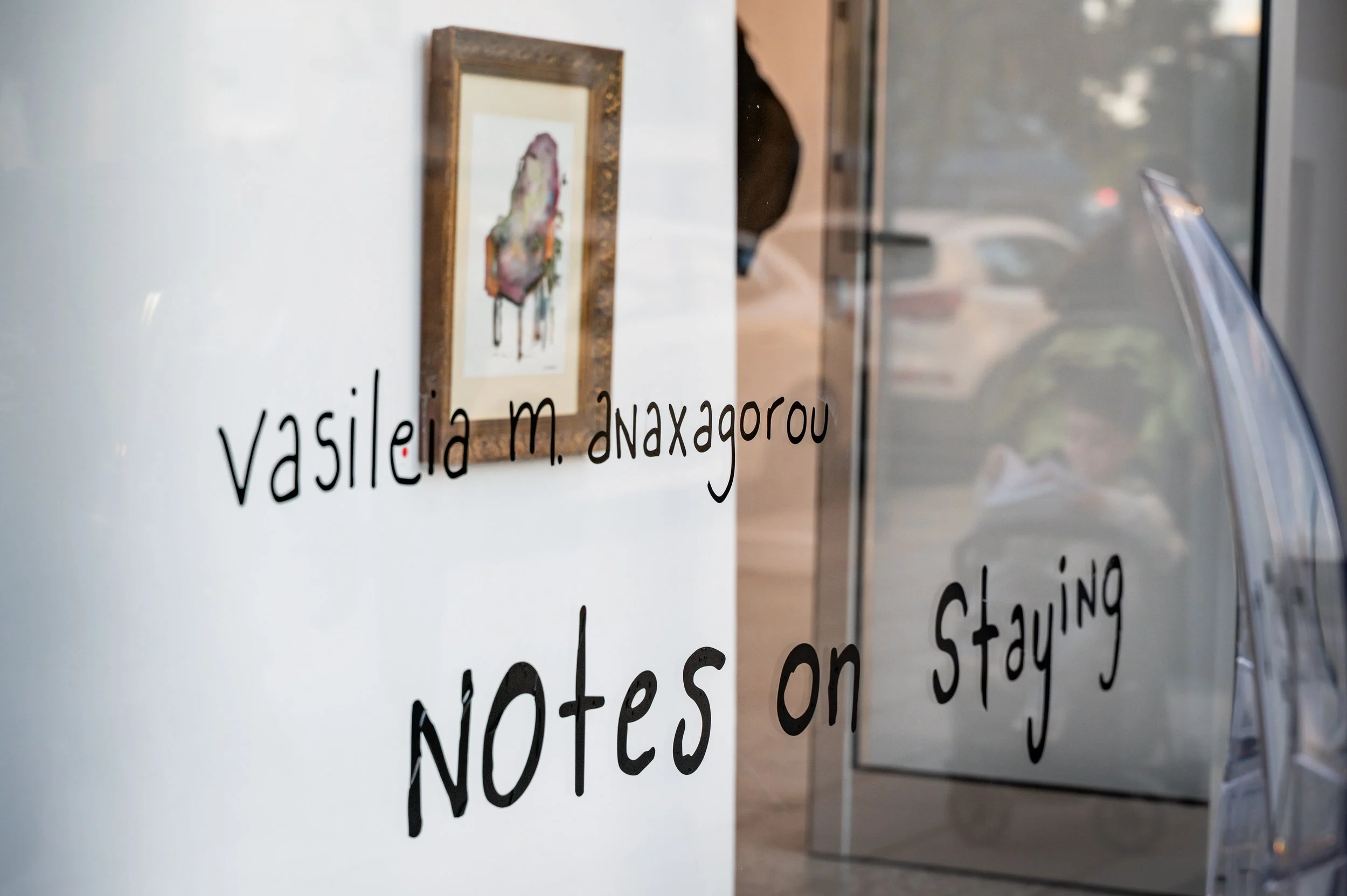
From the opening on “notes on staying” / April 2026, stand in line gallery, nicosia
the Silence After the Applause
A few weeks have passed since my solo exhibition, Notes on Staying, came to an end. There is something inherently violent in exhibiting one's work. For almost a year, the exhibition quietly occupied my mind. My entire life. Who I was. It was not something I was preparing for. It became the way I experienced time. Every conversation, every book I picked up, every journey, every moment of doubt somehow found its way back into the studio. Looking back now, I realise the exhibition became a representation of where I was, mentally, physically, spiritually. Even before I knew that was what I was making. The opening came and went almost too quickly. It was everything I could have hoped for. The gallery was full, people stayed, returned, shared conversations that have remained with me long after the exhibition closed. Watching someone spend time with a work you have lived with for some time now is a strange experience. You stand nearby, pretending not to listen, but every word somehow reaches you. What I was not prepared for was the feeling of exposure. Despite the years of showing my work in public, this feeling remains utterly foreign. I don't mean the obvious kind. As artists, we know that exhibiting means placing our work before others. We accept that people will like it, dislike it, ignore it, or question it. That has never frightened me. The exposure I am talking about is quieter than that. It happens when people begin telling you what your work is about. Throughout the exhibition, people spoke to me with incredible generosity. They saw things I had never consciously placed there. They connected the works to memories from their own lives, to loss, love, relationships, friendships, politics, family, migration, hope, grief. Some interpretations were close to where the work had begun, but others travelled somewhere entirely different. I noticed something in myself during those conversations. I wanted to explain because I wanted to hold on to the place from which the work had emerged. I wanted to tell them where an idea first appeared, what a material meant to me, why a work had found its way into a piece. Almost as though explaining the work would somehow protect it. Or perhaps protect me. It made me wonder whether exhibiting is, above all, an act of letting go. For months, the work belongs to you. It grows in the privacy of the studio, where no explanation is required. There are no labels, no questions, no prices, no expectations. Nothing. Only the act of making, changing your mind, beginning again. Then, suddenly, it belongs to everyone else. Not literally, of course, but in another sense. People carry it away with them. They remember different details. They attach it to experiences you have never lived. They remember The Fool differently than you. The work continues existing in ways you can neither anticipate nor control. And perhaps that is what art has always done. Maybe an artwork is never completed in the studio. Maybe it only begins there. It becomes something else each time another person encounters it, bringing with them a lifetime of memories, fears, desires and absences. The work remains physically unchanged, but somehow it is never the same twice. I have been thinking about this a lot since the exhibition closed. I don't think it is because I am searching for the "correct" interpretation of Notes on Staying. I don't think one exists anymore. If anything, exposing myself taught me that meaning is far less stable than I once imagined. What stays with me is not whether people understood the work as I intended. It is the realisation that, once shared, the work quietly stops belonging only to its maker. Maybe that is the real vulnerability of showing up, of taking up space. It has never been about being seen, but about accepting that your work will go on living a life that no longer includes your permission. And then there is the silence. It arrives only after months of intensity. After the conversations have ended, the walls have been emptied, and the work has found new homes in the memories of other people. It is a strange silence, because from the outside it looks like rest. But it does not always feel restful. Every time I expose myself through my work, something in me is emptied alongside it. I have learned not to resist this feeling. It is not creative exhaustion in the ordinary sense. It is as though I have spent months translating parts of myself into material, into parts of staying, into objects that no longer belong to me. Once they leave, I am left with a version of myself I no longer quite recognise. Perhaps this is why I always disappear for a while after an exhibition. Not to escape, but to become unfamiliar to myself again. To make room for new questions before searching for new answers. To read without looking for references. To travel without looking for metaphors. To return to the mundane of ordinary life, to washing clothes and cleaning up my closet, where ideas have the chance to arrive unnoticed. This now is perhaps a part of that return. Not as a declaration that I know where I am going next, but as a place to inhabit the in-between. A room where thoughts can exist before they become artworks. Where uncertainty does not need to be resolved. Where I can slowly learn who I am after Notes on Staying, before whatever comes next.Where is Man, Love? / letter to love no.6
Dear Love,
Last year, while I was in Oxford, I booked a flight to Krakow. It was last minute, mostly unplanned, and I had little money at the time, but I said whatever, go. I wanted to see Auschwitz. I had to visit Auschwitz. I was reading about trauma, resilience, and representations, and I wanted to know the extent a human can go to inflict pain on another, to be precise.
I called Vasiliki.
“Shall we go to Pournara?”
“ Yes, Wednesday.”
Subconsciously, there is a reason I wanted to go with her, I believe. We share a special bond, and despite the age difference, she is a friend that I can go to and discuss all the things that make me sick in my stomach.
Few people know that such a camp exists a few kilometers outside the capital. I did a piece “Where is Man: Pournara, Cyprus 2020”, based on a photograph I saw on social media, and months after, we went out for a drink with Vasiliki, and I showed the painting to her, coincidentally she told me that it was a photo she has taken herself in a protest outside the camp. I didn’t know.
When I did the painting, my only experience with a refugee camp was not based on real-life encounters. They were rather peculiar interactions I had with photographs and writings, now and then. But that photograph gave me shivers.
I drove there with Vasiliki, and I had my camera with me. I started recording as soon as I saw the sign. A HUGE sign indicates that a few kilometers away, there is the First Reception Centre for Refugees, Pournara. As we approached, there were long fences that looked more like open-air prisons rather than reception centers, and I am not joking. I mean, language is imperative indeed, always has been, I think, that was neither a center nor a reception. It was a concentration camp.
As I was enjoying the comfort of my car and the heated seats, I drove further down. I am not sure whether I felt cold because it is winter (it is January after all) or because every fiber of my being felt frigid because of what my eyes were seeing. I could tell that chances are, the people in those camps wouldn’t even possess a blanket for a cold winter night. And I was right. We approached a group of people outside the camp, there were tents there, and it felt odd that they were standing outside the fences. I pulled over.
One man, tall, with his mask on in his mid-30s, approached the car. He told us that they are here because the camp is full and there is no space for them. That the center can no longer accept any more people. He was a newbie there; he arrived in Pournara three days ago. Maybe it was four. I am not sure. I froze. I am sure that there are far worse conditions that he did not describe to me, perhaps out of fear or concern that confessing the atrocities might compromise his protection. He kept saying that there are no blankets, that they sleep on the floor, that they won’t let them shower, that the only thing they get for breakfast is a piece of bread. In Auschwitz, they would get a cup of coffee too, but the government perhaps thinks that they shouldn’t treat them like that, so they wouldn’t get too excited and stay. In Cyprus. In a no-man’s corrupt land where incompetent is again, to say the least, the best thing one can ever be to run this country.
I could not record much, I was horrified, stunned, and my mechanism was to show zero emotion in the eyes that came before me. I was terrified that I could not give comfort, that I couldn’t tell them that what you are experiencing now is not a reflection of the broader community once you get your papers sorted because I am not sure for that myself anymore.
Pournara is no less than a concentration camp. Pournara looked like Auschwitz. It felt like Auschwitz to me. It felt like that because I know that this country has failed to protect its people, let alone an “unappropriated other,” an asylum-seeker, a refugee. During my visit, the icing on the cake was when I saw a church placed within the concentration camp. A cross indicates a subtle irony of an a la carte humanism people tend to carry as they navigate their exhibitionist lives. What is that cross for at the back? An old church, I suppose, or a reminder, that indeed the construct of the God they (when I say they, you know who you are) worship is not for all.
If this exposes you or harasses you in any way, please do send the police to confiscate my belongings. That is who you are, anyway. This is what you have a slight competence in doing.
I will dream of Pournara tonight, and if what you are seeing is bothering, as it should, then speak up.
Yours (perhaps not forever if I get arrested),
Vasileia
my corona letter to Love/ no.5
Dear Love,
On Friday the 4th of December, I tested positive for COVID-19. Since March, I was always super paranoid about this virus, not knowing what it was or how the symptoms felt like. I heard people saying it's like the flu. In February, I was in bed for a week with the flu, and because of that, I somehow persuaded myself that I already had it.
Funny world we live in. But I don't blame the people; I tend to do that a lot. The government has failed to take measures. I got COVID-19, not because I wasn't obeying the measures, quite the contrary. Those that know me can reassure you that I always wore my mask. I would regularly wash my mask or use disposable ones when I taught kids to change them regularly. I would never wear the same mask, like never. I would wash my hands, use hand sanitizers, COVID, or no COVID. There was a time that my friends got so fed up with me that told me that they don't want to discuss anything about coronavirus again. I was tiresome.
For the past nine months, on every social media or mainstream media outlet, we have been bombarded with some "experts" saying that this virus is nothing to be worried about. The government is purposely spreading fear to control the masses. I even read in many places that more people die from influenza compared to COVID-19. Then I saw the anti-maskers, protesting (in the middle of a CONTAGIOUS pandemic) their refusal to wear their mask because it goes against their freedom of speech/choice. Fine, I am not questioning your right to protest. What I should ask is…. what did the government do to ensure that its people won't perceive the pandemic's measures the way they did? In other words, to put it simply and clear, how did the government communicate the pandemic to the people?
As soon as I tested positive, I started thinking of how the government dealt with the pandemic. In the past months, we only hear that we will be punished during the Christmas holidays with a lockdown if we don't stay home. I could not care less if I go out in a fancy, overpriced, overrated restaurant. My family does not do that, anyway. We celebrate Christmas at home - always. But anyway. Psychological bullying? Really? From the ones that are supposedly there to protect us? Is this how one successfully communicates a pandemic to the people who have no idea how this thing even started?
Then we had local lockdowns that failed miserably to control the numbers, but they went on and extended the same measures that had zero impact to the rest of Cyprus, and meanwhile, COVID-19 was spreading uncontrollably. The churches remained open. Who can go against the establishment in this country anyway? Restaurants could not work in their full capacity (they had to close at 7 pm), but they were not allowed any governmental support since, by governmental rules, they were operating just fine. That's criminal.
At schools, the teachers tried to communicate to the kids why they should all wear their masks. The government never did that. Instead, they fined 300 euro to each citizen that was seen outdoors without their mask on. They had time to prepare, build, or improve the existing infrastructures of public schools. To train teachers in remote teaching. Plenty of time to do that. You know the weather in Cyprus is nice and warm. We even got an extended summer, but instead, they opened schools without a plan B. I teach at a school, and I can assure you, Love, that schools were turning into little coronalands. I no longer buy the excuse "oh, the government never handled a pandemic before. How can they know?". No, this time, I believe that they do not care. And here we are in the now, few weeks before Christmas, with a kind of lockdown that could have happened a month ago. Too little, too late. The community is already way infected for the numbers to fall.
The government had one job. ONE job. To be responsible. To protect the elderly and the vulnerable. To communicate the seriousness of the situation. Instead, they failed, and with their failure, they triggered all conspiracy theorists. They generated disbelief. They contributed to the economic and psychological draining of the people.
And no, COVID is not like the flu. This is the day, i-lost-the-count, without smell and taste, isolated in a house outside Larnaka, and trust me, I might have no clue what I am eating, but I sure as hell feel the stigma. So here I am. I got COVID-19, and sadly, most of us are going to get it. Because, too little, too late.
Until next time Love,
Stay safe.
Yours forever,
Vasileia
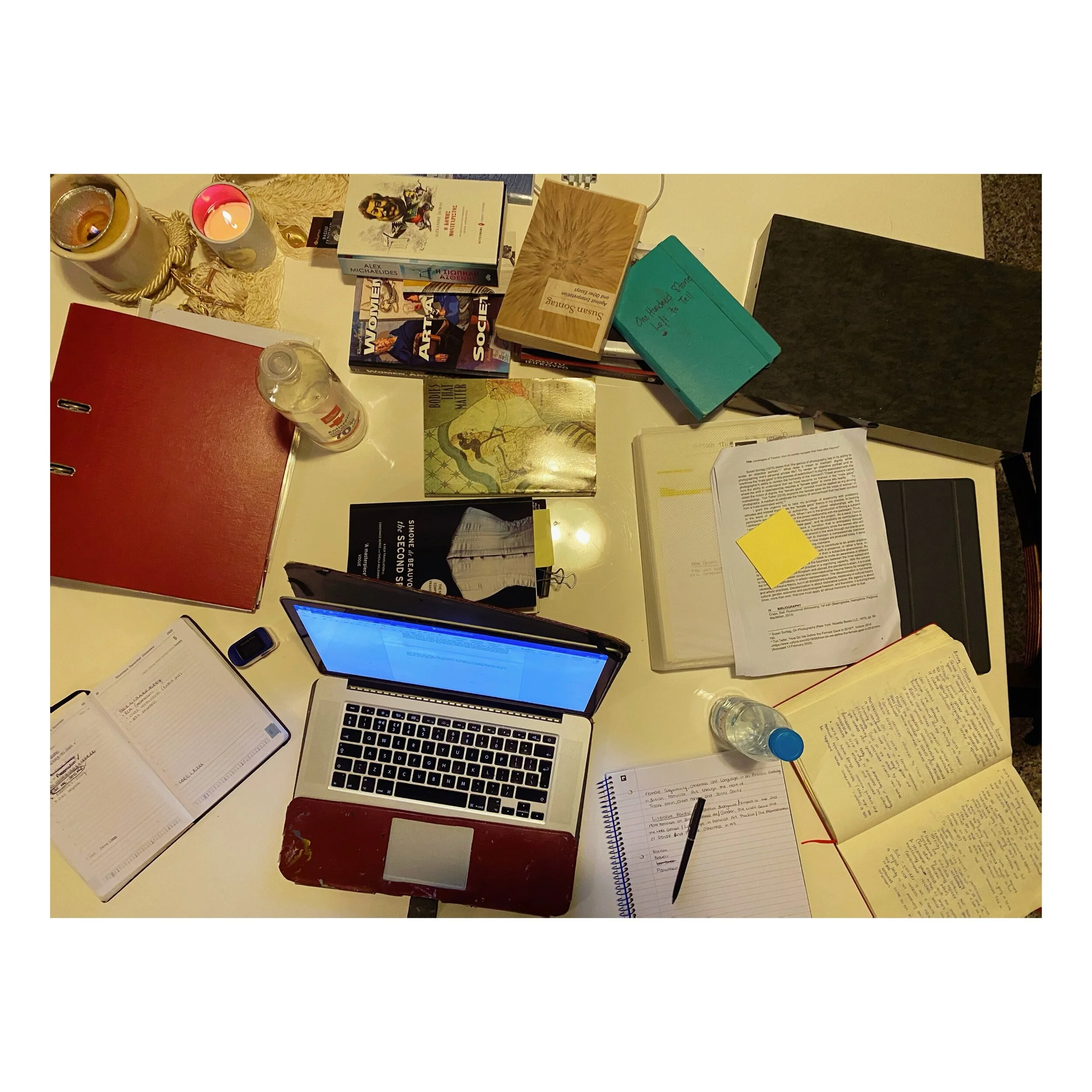
parts of the diary of my quarantine /
I was a Shafiq too, kind of letter to Love / no. 4
Dear Love,
It's been a while, and I tend to write to you only when I am furious. Don't get it wrong, I have been angry for some time now, but I am also tired. Way too tired.
Many things are going on at the moment. Local lockdowns, protests, corruption in the country (yes, it has always been around, so nothing surprising here), but I guess I was trying to get a grip for my survival, mental, financial, and physical. I have been facing some ups and downs lately but nothing worrying, despite my body responding to some of my recent stress.
I have been on and off Facebook, refusing to follow what people write about until a few weeks ago, and I guess it's my time to stop following the feed again. Sorry for yet another letter of excessive ranting of COVID-19, and I am pretty sure you had enough of those from all of your lovers. But Love, the pandemic, is provocatively undressing the cruelty of inequality. And you know how I feel about that. It makes me hate myself with every fiber of my being because I was born white and privileged.
There is this small supermarket store near my studio; I see the same person every day, always serving all customers with his mask on – but he wears the mask covering the nose and all, no joke. I went this morning to buy some things I needed for the studio, and I asked for his name. He said:
"My name is Shafiq madam. What's your name?"
"My name is Vasileia. Nice to meet you, Shafiq. Where are you from? India?"
I just assumed he was from India because the shop sells Indian stuff, and every time I go there, I keep on sending pictures to my Indian best friend in England, asking her whether it's worth buying the products.
"No, madam. I am from Bangladesh."
"Oh, okay."
"You no like Bangladesh, ma'am?"
"No, Shafiq, I don't mind; I like everyone."
"Here is your change, madam."
"Thank you, Shafiq."
"You will forget my name when you come again, madam."
“No, Shafiq, trust me, I won't. Have a nice day."
I feel weird every time someone calls me madam. I am not a madam; I am barely a lady for what I know. However, I understand why it is so ingrained in their understanding of what good behavior consists of when talking to Cypriots. But, a Cypriot would never address another Cypriot with madam or ma'am. Especially someone that is of similar age. Shafiq is not that older than me either. But, there is this understanding that he should be respectful or always be polite; otherwise, he will face the consequences. Being a foreigner in one's country means one should never cross any boundaries. Maintaining that boundary implies that they should refer to all Cypriots as "sir," "ma'am," or "madam."
But I think, It gets more complicated than that, Love. It gets more complicated when people like Shafiq come to work in Cyprus, and they are given a minimum wage salary. Then they are given accommodation, which means 6-7 people living together under one small household. And it gets more and more complicated when they should say "thank you" in return. Thank you for what? For offering them the worst living condition that a person lives in, in this country? And then the argument that they should be thankful because their country is a mess is no indication that this country ain't a mess either. This country is even worse because it's treating its people and foreigners like shit.
So yes, Love, addressing someone madam, is inferiority vs. superiority issue. And then I came back to my studio, I was scrolling on Facebook while I was having my hot brew, and I saw a post saying that today is Sunday (no shit Sherlock). It's raining (yes, too happy about that), and all these foreign workers have their day off, and they will be meeting into small apartments to spend their day, and that this is causing a high risk of spreading the virus.
Aham, that might be the case. However, I am thinking about Limassol's abattoir and the 92 COVID-19 positive cases found in that abattoir. And then I am thinking about that bakery shop and all the COVID-19 positive cases back in March. I am then thinking about privileged white people's audacity to ask for the restriction of one's freedom based on their skin color or occupation. The statement suggested or promoted it as a straightforward solution: these apartments (even if they follow the government's ten people protocol) should close down. And then, I sat down, and I started thinking. Suppose you are to close down apartments that foreigners gather in their day off (so they will not potentially spread the virus to the families they are working for), okay? In that case, you should restrict fancy dinner parties in which privileged white people gather together on a Saturday or a Friday night. How about we do that? Or maybe we should cancel the entry of football or even basketball players that come in the country (they are foreigners too, no? But they are wealthy foreigners so we can't demand that) because they are also a source of spreading the virus. And I do believe we had cases in which the virus was spread in fancy dinner parties.
My point is that the virus does not fucking discriminate against anyone, okay? If you restrict one person, you limit the other too. If you limit the gathering of foreigners, you curtail the gatherings of locals regardless of their status. If done or suggested otherwise, you are a racist white privileged person in which I refuse to breathe the same air as you. I was a Shafiq, too, you know, in the United Kingdom, once.
That's all, Love. Until next time.
Yours forever,
Vasileia
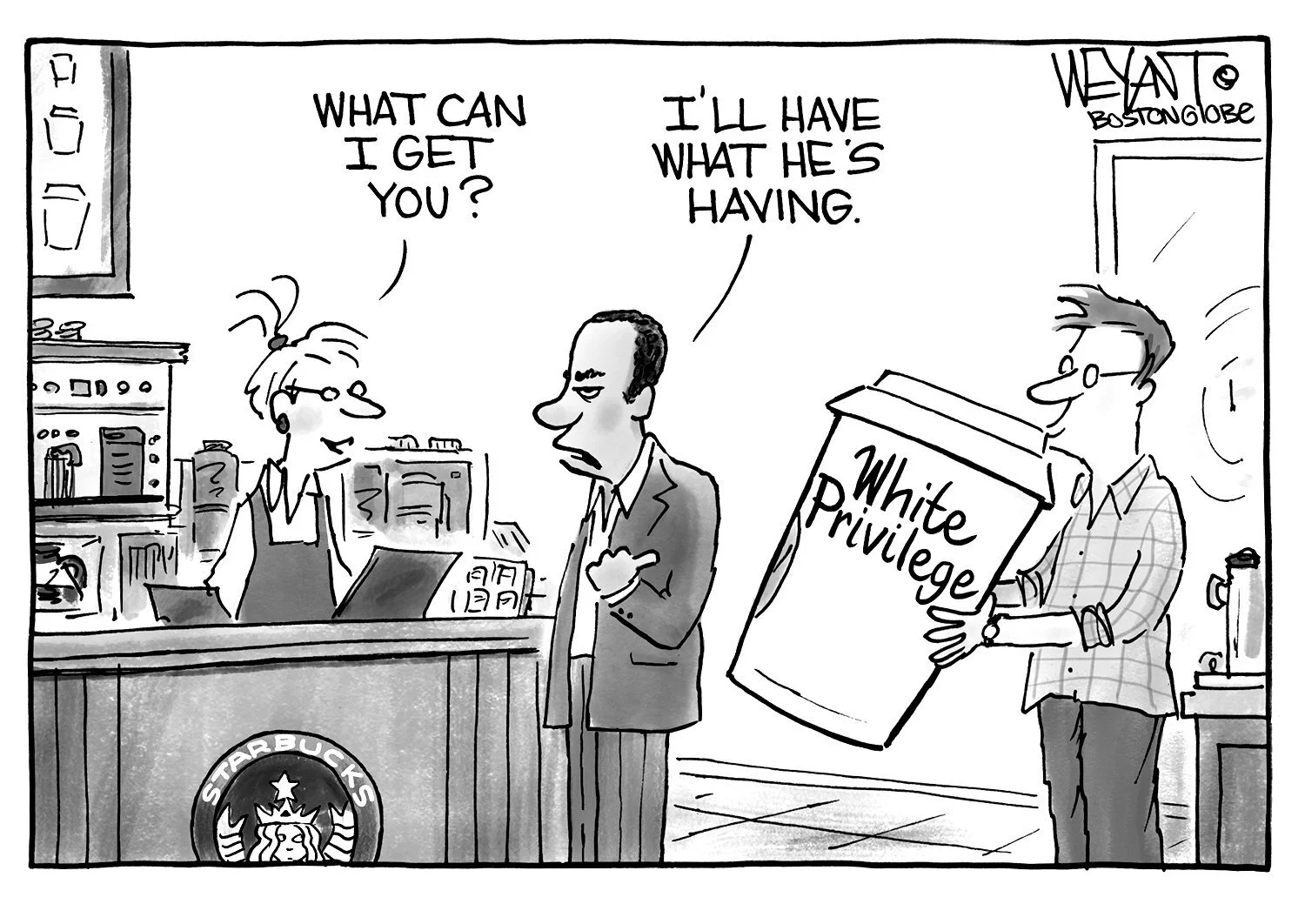
Cartoon by Christopher Weyant of The Boston Globe, syndicated by Cagle Cartoons
seeking for support letter to Love / no.3
Dear Love,
Vile Hypocrites,
In all their outward shows
Filthy inwardly - they pollute
Vile hypocrites take little or no care.
I see them, how
How deplorable, they are within.
Love, I do not wish to sound needy in my letter to you. I never rely on other people, and you know it. I know if you want to get a job done, you should do it yourself, from the grocery shopping to the bigger things. I chose to be an artist and never expected to receive support to remain one. My mother supports me, sometimes it comes with a price, but I thank her for that. Things are tough, sometimes better, and sometimes even more robust, but I am always looking at the bigger picture and move on. But I am furious again. I am sick of the vile hypocrites. They are dangerous, and I now know it.
I am a non-essential worker, I think. But I am not a vile hypocrite. I canceled some of my shows - the bread and butter of my life and stayed in isolation. Even though I could have scheduled them now, it was a choice at the end of the day to withdraw from any physical proximity to others, to crowds, from know-it-all assholes. I did it to express my loyalty to others that I care about. It was a choice that could have quickly been done since I am a non-essential worker.
We, as non-essential workers, have always faced precarity in our practise. It was a choice. But even though we are non-essential workers, we are part of civic engagement before we are artists. That is an underlying difference we carry in the nature of our work, compare to any other essential workers. I use essential and non-essential in a subtly ironic tone, and I hope you picked that up already, Love.
Making art gives me something to hold onto. I did not go into the arts to make a profit. I did not go to art school because I thought this profession would make me financially stable. Even my family doesn't understand that. I do art because I need to stay in touch with myself. It is my journey and taxi to sanity and madness. I don't think that what I am doing carries great importance. People can live without art. Or maybe not. Well, during the lockdown, they sure as hell couldn't.
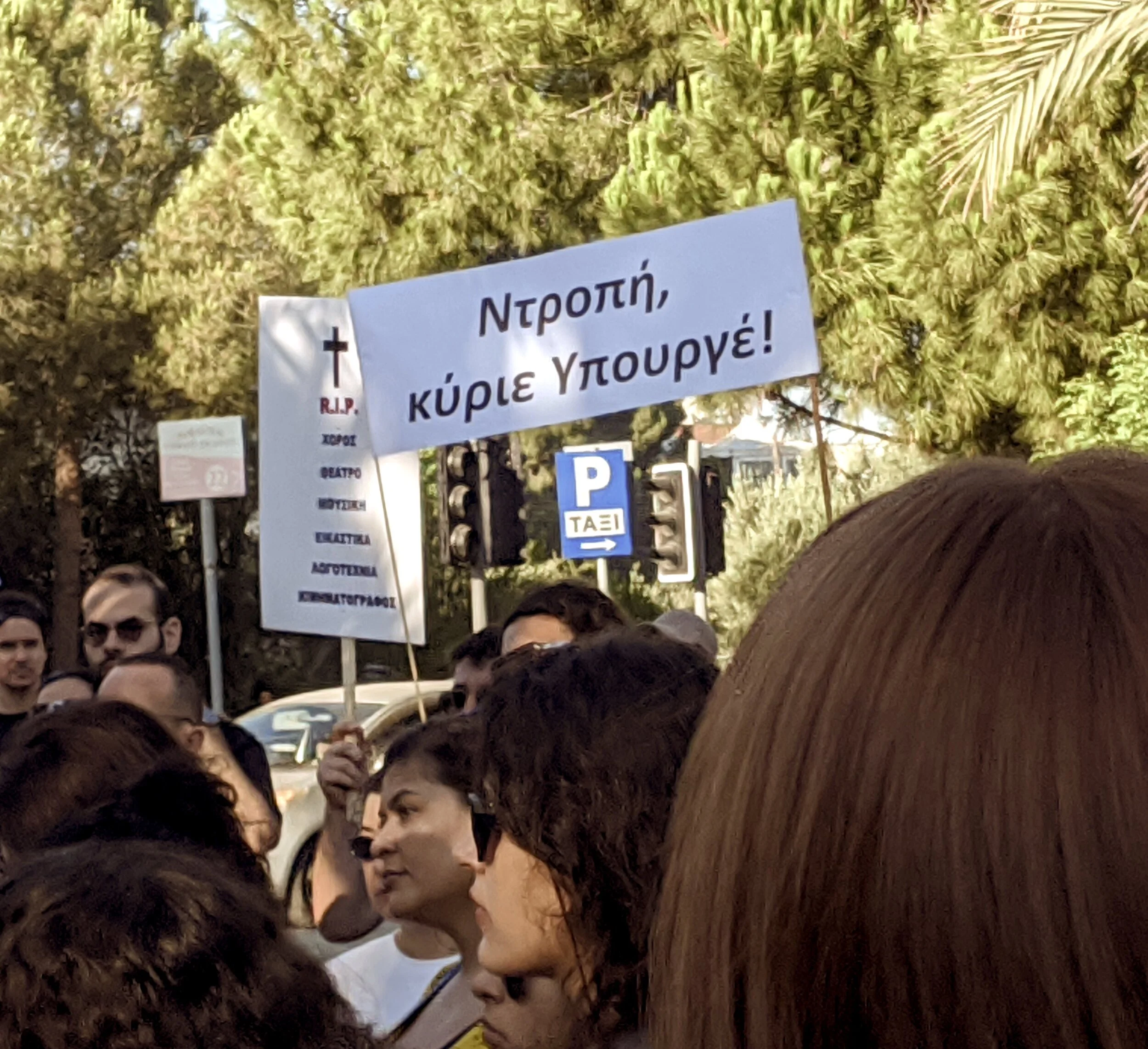
So the question is, how does a non-essential worker complain? Should he or she complain? Or even, what is a complaint, Love? I read about it, think about it, and discuss it every day, with you, with other people.
But my answers never came. How does one read a complaint, Love? Can bureaucracy be supportive? When a complaint is delivered and addressed, does this mean you get support, validation, or does it mean that it has been solved? What is support, Love? Does support come behind closed doors and confined walls? Is it enough for the bureaucracy to show up in a theatre or performance premiere, sit in the first row, and act as the first-class citizen? Is it sufficient if they show up in an opening and appear in the press? Is support an emergency response package that comes as a disguise of a philanthropic giving? When an emergency response package does not come, what does it mean? Does it mean that support no longer exists? Is it the right time to file a complaint?
What the fuck is a complaint? What the fuck does it mean when someone complains? Does it stand somewhere?
In the past month, I have been thinking a lot about support. Whether it is financial or mental – or none of the above. I have been thinking about the nature of a complaint when support is poorly addressed, and I thought of the Cypriot government. This government reminds me of an ex you don't want to think about but is always present. It's like a cancerous cell, growing uncontrollably in a patient's body and won't go away.
I went to an art opening the other day, and I saw many people, politicians, ministers, and other VIPs. For the ones that do not know the background story, this is charming, sometimes even cute. Mainly because the show was for a good cause. I stayed there for a while, watching people interacting with one another, and it hit me. Is this support to the arts? Is this an outward show from the inwardly filthy? Does support come if the press is around? Isn't this vile hypocrisy?
I know the answer, Love.
Support comes when one understands the values of an artist in a community. And clearly, they don't get it.
Support comes when one understands that art is not the whim of an eccentric artist, but more than that. And clearly, they don't get it.
Support comes when one understands that art can have a social impact, or rather, supporting the arts is a social impact. And clearly, they don't get it.
Support comes when one understands that art is education, innovation, a unified community. And clearly, they don't get it.
Support is not merely an emergency response package of cash. Support is not an outward show that comes when the press is around. Support is part of a school of thought, a philosophy, a mentality, and clearly, they are missing out. But support in this place, never came, for neither essential nor non-essential workers, and I will leave it here.
Love, a friend said, screw the government. People for people. The ones that show up because they genuinely know what support is. The ones that show up, because, for them, art makes them hold onto life. The rest, make me sick, Love. People for the people.
Always has been, I think.
Vile Hypocrites,
In all their outward shows
Filthy inwardly - they pollute
Vile hypocrites take little or no care.
I see them, how
How deplorable, they are within.
Until next time, Love.
Yours forever,
Vasileia
my white, privileged letter to Love / no.2
Dear Love,
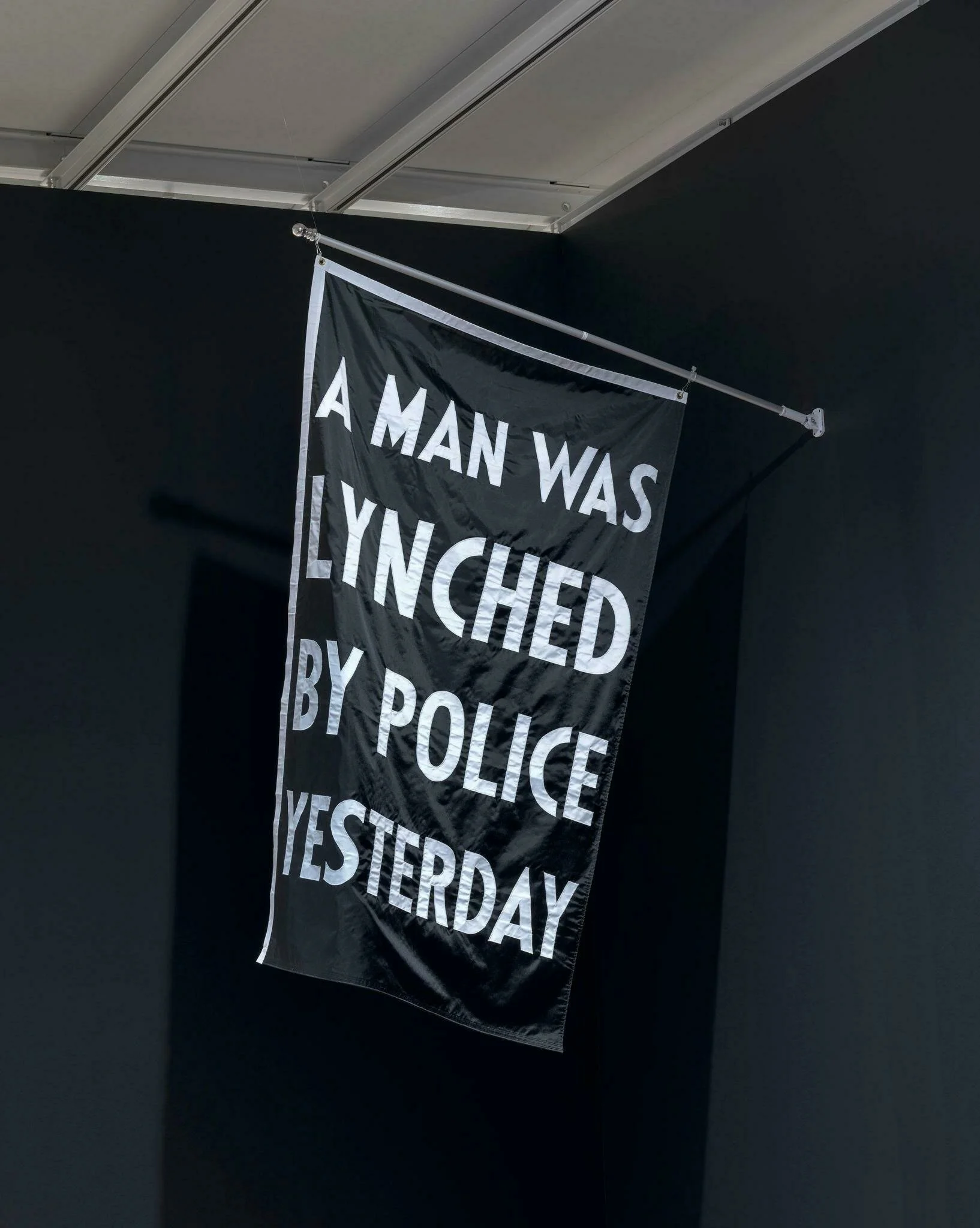
“A MAN WAS LYNCHED BY POLICE YESTERDAY”
These words in a banner were the first thing I saw as soon as I entered the museum's premises. Do you remember this? I think it was 2017 when you took me to the Whitney Museum in New York. Deep inside, I questioned whether this flag was part of the exhibition or not. I wasn’t sure you see. I am white and privileged. I noticed the wording: “A MAN” – not a black man, not a white man. A MAN. A man was lynched. Does it matter whether it was black, white, Asian, or Latino? Clearly, yes.
Can you recall how much riveted I was by it? I wanted to know more. I couldn’t resonate with it. The police have never lynched me. I am white and privileged, you see. You told me that between 1920 to 1938, the NAACP flew a similar flag outside its headquarters on 5th Ave. Black people were murdered at the time, by mobs. Dread Scott updated this flag because of the murder of Walter Scott by a North Charleston officer. It was a protest against the constant racial violence. I have never felt threatened because of the colour of my skin. I have never thought that the police can kill me for no reason whatsoever. I am white and privileged, you see.
I had a dream last night. It was you, Dread Scott, and me in Terra Blues Bar in New York. We were discussing his eponymous words on that flag. About police brutality. About violence. About racial discrimination. Racism. The past sets the stage for the present, and it scares me. The past exists in the present, too, but in a new form.
It’s May, and its 2020, but read this and repeat after me:
“GEORGE FLOYD WAS LYNCHED BY POLICE YESTERDAY”
I did not watch the video, but I did stare at the image of a police officer’s knee on Floyd’s neck. I contributed to the voyeurism, Love. I feel terrible; I don’t have the stomach anymore. I read somewhere that his white privileged knee remained there (on his neck) for over 5 minutes and then he died. His last words were: "I CAN'T BREATHE." White supremacy did not grant any dignity to his last words. Can you imagine? What is wrong with these people, Love? Wasn’t he worthy of basic decency, Love? The police were responding to the suspicion of a forgery, they said. If this video did not exist, what would the public have said? Would black life matter to them? Would it go down in history as a response to potential threats or terrorism from a black person? Would justice serve its role? Will justice serve its purpose? Or will these police officers receive another trophy from the people that want to make America great again? Who are they fooling, Love? Come on. It was never really great, to begin with. America carries a hurtful past infused with ordeals and blood. People’s blood.
I believe in protest, Love. I feel that people, albeit their hectic routines, can still protest through writing, activism, food intake choices, refusing to participate in discussions, showing intolerance to injustices, and refusing to buy their food or coffee from certain places. They can protest through their choices. Let’s do that too, Love. Let’s be anti-racist. In every corner of the world, in every street, in every classroom, in every discussion.
Repeat after me: I will make it a lifelong purpose, even if I am white, and privileged: to articulate and transcend history, or even put it in the service of education. Zero tolerance to this, even if it’s in Minnesota, Charlottesville, London, Paris, Athens, or Cyprus. Racism speaks the same language in every single part of the world. To all the George Floyd’s out there. I can’t breathe either, and I am white and privileged. I will stop here.
Love you, Love. Speak to you soon, when I am no longer angry (as if that will ever happen).
Yours forever and eternally,
Vasileia
A Man Was Lynched by Police Yesterday
2015
anti-capitalist love letter to Love / no.1
Love,
I hope you are well. I am locked in my studio, working on my projects. I haven’t heard from you since forever. How is everything? How is the lockdown? Sorry for not having the time to reply. I am still trying to keep up with all the chores in this new status quo, but I am fine.
I read your letter, and I am worried, Love. You said you were sick of isolation -that you are no longer coping. I feel for you. I genuinely do, but you need to keep it together. I think the fact that we cannot see each other is not the worst thing that can happen to us. Discrimination, on the other hand, is. It can manifest in so many different ways. It can lead to isolation - the worst kind of isolation. But I don’t feel we mean it the same way. I think that depending on the subject being hit, isolation becomes more severe. Like any other trauma, the myths and the taboos are there. There is a stigma attached to it, perhaps stemmed due to a lack of awareness. The same kind of trauma that people experience during war times. It took a while for people to address it as an epidemic - even to talk about it. Once diagnosed, there was something derogatory to this kind of trauma. The shame of not being responsible enough, the distrust and hatred that you could pass on to other people, and the discrimination that you are not granted privileges or benefits because of your status or current circumstances and the stigma, because you got sick.
I am scared, Love. Can you smell the scent of death? Lonely deaths to be more precise. Obituaries in newspapers, on the radio, on television channels. Numbers. People became the equivalent of numbers. The origins (and sometimes even beyond) of the disease became a specific aspect of identity politics, and the death toll was multiplying like a cancerous cell. Every reporter, whether legit or not, became a quasi-obituary writer. The virus was and still is little or not even understood in its totality. Misinformation and prejudice were and still are rife. People treat it like the plague.
Are you confused, Love? I am not talking about COVID-19. It is not an epidemic, after all, but a pandemic. Bureaucracy must lay the foundations in those definitions if you know, you know. Anyway, that’s another topic. Don’t you remember what happened in the 1980s? You always talked about it.
Do you remember that people would not use its scientific name? People would not openly talk about AIDS. It was the “gay plague” or rather as mistakenly labeled the “gay-related immune deficiency.” A death sentence that you would not even talk about it. And as the world grapples with COVID-19, I am drawing so many parallels. I don’t speak the science language, Love. I let the scientists do their job, as I am doing mine. I am pretty sick of people sharing their opinions about the pandemic. I am sick of all the conspiracy theories. It would be best if they didn’t even have an opinion at all; it is not even debatable at this point. They know nothing, Love. They are not scientists, so why won’t they let us roll with it and find ways to make this novel sufferable?
Don’t be angry with me, Love, for being judgmental. I know, I know, I shouldn’t be judgmental, as everyone is grieving differently during these unprecedented times. I have never seen so many people from so many different parts of the world, sharing the same discomfort and fear at one time. What we don’t know about this virus breaks our feeling of safety, and the grief becomes unmanageable. We all turned virtually to control our anxiety levels, some of us to work, earn some money, or others to dampen some of the pain of the unforeseeable loneliness of isolation.
When we are asked to stay inside, I wasn’t shocked, Love. Why were you shocked? I expected it. Since December I have been following the news, and I realised that what we don’t know might kill us. Pick up my words, Love, and I don’t mean the virus. I mean our ignorance. As you know, I was in Oxford until early March, and I was quite shocked that nobody took COVID-19 seriously. In all the meetings I had with the staff in Oxford, they were all advising us not to contribute to the hysteria. What an irony, Love. The hysteria. Perhaps they did not want a repetition of what has happened with the swine flu. This is not typical of the British, though. I knew how to cope with a potential lockdown; I am war material. You know me, I am not tech-savvy, but the technology was indeed a pervasive feature of my life long before the quarantine. Since I can remember, the first thing I did in the morning was switch on my laptop and write you letters as I was having my early morning brew. Don’t get me wrong; I was never the anti-social type; quite the contrary, I must say. However, I always disliked people in masses, though, and isolation for me turned to be a good thing.
I am not inferring that this is not a difficult time for me, but staying home did not stretch my limitations. The most challenging part was to accept that I would no longer enter the premises of the University of Oxford. The university that I worked so hard to get into. I left Oxford for the Easter break, and I never thought that March the 13th would have been my last night. I never thought that my experience in a leading university would disperse into an antiseptic hand-gel and a mask on an airplane back to Cyprus.
I came home, and it felt good. I am safe. I am staying with my family, and mom cooks homemade food every day - she says hi, by the way. The weather is always lovely here, so thankfully, I do not have to go through an insufferable number of pathetic fallacies that would fit the context we were all going through. To be honest with you, I did not expect that the most challenging part was to try and figure out how to make good use of this time and be productive. The University of Oxford did not have a contingency plan laid out for us, and at the very beginning, we were taking every day as it came. I mean, that indicates that no one, regardless of status, was ever prepared to face a pandemic at the end of the day. Nonetheless, I knew I had to continue with my projects. I had to meet specific deadlines. I had to be on time in all the virtual meetings on Zoom, Teams, Cisco Webex, Skype, Messenger. Reply to all the e-mails. Send you a letter, of course. Do not panic. Do not be a drama queen. Do not be a cunt. Show understanding and compassion. Be considerate. Maintain social distance. Do not go out. Follow the emergency rules of the government. Stay safe. Be alert. Stay sane. That was a lot. That is still a lot.
In the beginning, I started conceptualizing the notion of “complaint” (thank you for that - for introducing me to Sara Ahmed, I mean). It all started when my social media feeds were bombarded with ads and articles on how to stir my productivity. So here’s my anti-capitalist love letter to you. It is perfectly fine if you just wanted to watch Netflix all day during the quarantine. It is perfectly fine if you just cooked all day or cleaned the house like a maniac. It is not perfectly fine, though, to assume that people should work as if nothing happened. But again, this is my anti-capitalist love letter. And they indeed are love letters - no one takes them seriously anymore. Except you, you are different, and I love you for that.
Anyways. I am getting off the topic. I was shocked by your letter - that kind of implied - that all artists should be able to work in isolation because that’s what we do and that the government never supported the arts, so why do it now? Who in his right mind would assume that the lockdown does not or shall not affect people because they happen to be artists? Who in his right mind would be okay with the status quo because the “before” was worse? I know that we did not sign up for stability when we choose to lead in this life. I know that as artists, we always faced precarity in our practise. That does not mean that some of us did not have to alter their studios within confined bedroom walls or even house corridors to stir our productivity. Some of us managed; some of us did not (and please show compassion). Some others do not have the privilege to have their practise revolving around a studio. Some had their shows, premiers, performances canceled, their funding froze, or even their salaries cut. Do not assume because YOU can work everywhere, then everyone else is sailing on that same boat. Spare me the small talk please, that because we are artists we should not be worried and that it is our job to create regardless of the circumstances. Please. I bought it for a brief moment, but I am no longer buying it. My anti-capitalist love letter disapproves of your mentality. I love you, Love, but I disagree.
As you know, I still have an MFA to obtain and some deadlines to meet, which means that currently, I am still working under the obligations of an institution. I am lucky because I have the best support system. The people I am working with are fantastic! They are always there, trying to push me (but not too much) to do work, be on time. I feel for them. They are artists, also affected by these unprecedented times. (I love the way this sounds, un-pre-cedented times. It makes COVID-19 sound so diplomatic which in reality it is not.)
I am very busy with all those long Teams meetings I have with the people at Oxford, which I still find hard to be on time every day for 3-4 hours minimum. I wanted to talk to you about a few questions that have always been on the table, perhaps from day one of the lockdown.
“How do you make art now?”
“What does it mean to be an artist now?”
“How do you incorporate this into your practise?”
All these questions are essential, but they will remain unanswered for a long time. For a reason, every time we discuss our role as artists now, I remember John. Do you remember John? I talked about him in the past. John was one of my mentors back when I was studying painting in the big apple. He was one of those who always questioned me, pushed me, and challenged me into new ways of thinking. Why am I referring to John?
I remember once he told me how it felt like working as an artist in the 1980s in the States. AIDS inserted itself into the art world’s conversations, reflecting much of the fear, the mourning, and the misunderstandings around the epidemic. From our discussions, I remember (or at least that’s how I interpreted it) that John was never too fond of this hysteria in the art world to raise awareness about AIDS. Maybe he wasn’t too fond of the idea that even if the art was not good because it automatically talked about AIDS, it gained impetus. Maybe.
I couldn’t understand his arguments at that point. Blame it on the innocence of my youth, or maybe it was because I wasn’t even born in the 1980s. It’s funny, though, how the AIDS era resonates with what is happening with the world today, not just on an “art level” but on everything. It’s interesting how we kind feel the need to respond to something we do not even understand. Perhaps it is not because I don’t understand it, I think it’s because I haven’t accepted it yet? But if it takes artists to make good or bad art that addresses any crisis, let it be it. If it goes against the conservative cultural institutions we have, then let it be it. If it ultimately raises awareness on controversial issues, please, by all means, it should be done. We need it now - more than ever. My practise is all about trauma, but now I am failing to address this (unprecedented time) in my work. Maybe, I say maybe, it’s because I was told to do it. That could be a possibility.
But is it true? I am addressing it now, even in my letter to you, Love. But now, I am angry. I am still angry with the stigma, of the conspiracy theories, of the abuse of power, and the cuts in our public health system. It took people a pandemic to realize that national health care should not be a privilege or designed for the few. It took people a pandemic to recognise that we will never mourn collectively because our status is a shield to a crisis. It took people a pandemic to realize that doctors, nurses, scientists, workers of the health care system should be treated with respect and should not be paid less than a football player.
But then again, all workers should be treated with respect. Period. Except for corrupted cops. You know me, Love, I will never change. Sorry, not sorry. I miss you terribly. Hope to hear from you soon. Write back when you can.
I love you, Love.
Yours,
Vasileia
A story of relentless abuse (2018)
*this text was awarded the Best departmental Thesis at the School of Visual Arts, in New York City (class of 2018)
Objectification and idealisation of the female body have often been a subject of feminist art criticism. The importance of our time to re-define and overthrow the “male gaze”[1] in a still phallocentric society is hence unquestionable. As a result, self-knowledge and awareness of the issue mentioned above are essential focal points to access and conceive the female authorship needed, especially in the process of this re-definition. Any theatrical glorification or a sexual sensation of the body, interpreted in the project is not deliberate. On the contrary, it is put aside and purposely ignored. If a spectator chooses - consciously or not - to devour a bait of the body in sexual means, heightens the importance of artists to elaborate on the female body. Art is an ongoing journey; it is a journey where political and cultural realities demand facing, and universal truths need to be explored and expressed in a tangible form. The pictorial imagery of war and abuse of the female body and beyond can remind us how vital freedom is in our fragile reality.
I am interested in the abuse of women regardless of their background. I am interested in breaking the boundaries of silence for the marginalised section of society. I constitute a terrifying presence beyond any functionalities and conventionalities to transform the female body into a psychological complexity that reflects the horrendous reality of abuse. Being highly critical of various events occurring globally, I begin with a vantage point to understand that women were and still are victims and spoils of war for the victorious armies. An army, in this case, is used as a literal or even a metaphorical entity. I seek to parallel the definition of armies with any form of abuse – whether it originates from war-zones or domestic households. Hence, the notion of war is an allegorical notion of torture. Rape is a form of abuse which should be seen as a cruel, but also an unavoidable consequence of this war/torture.
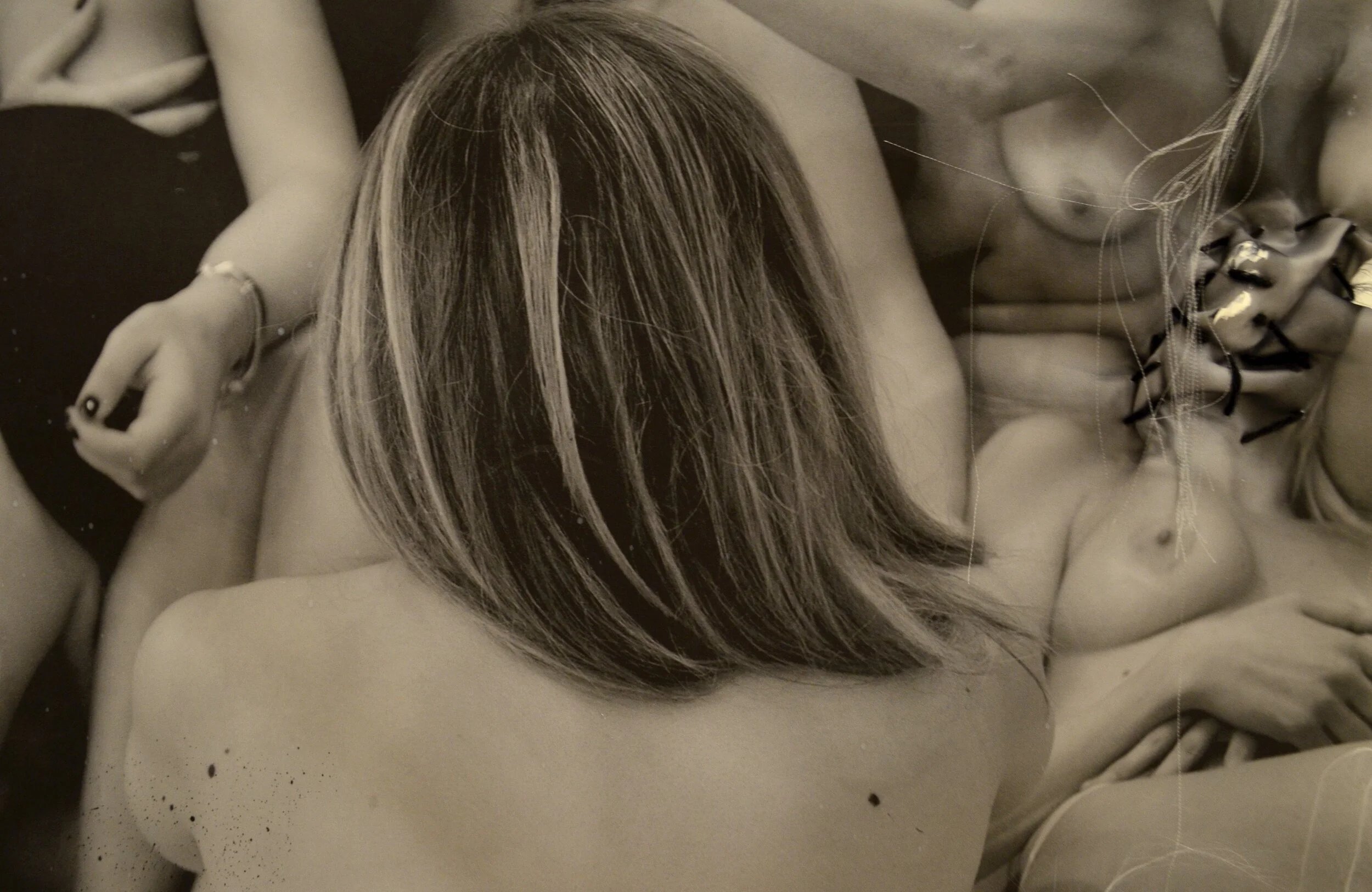
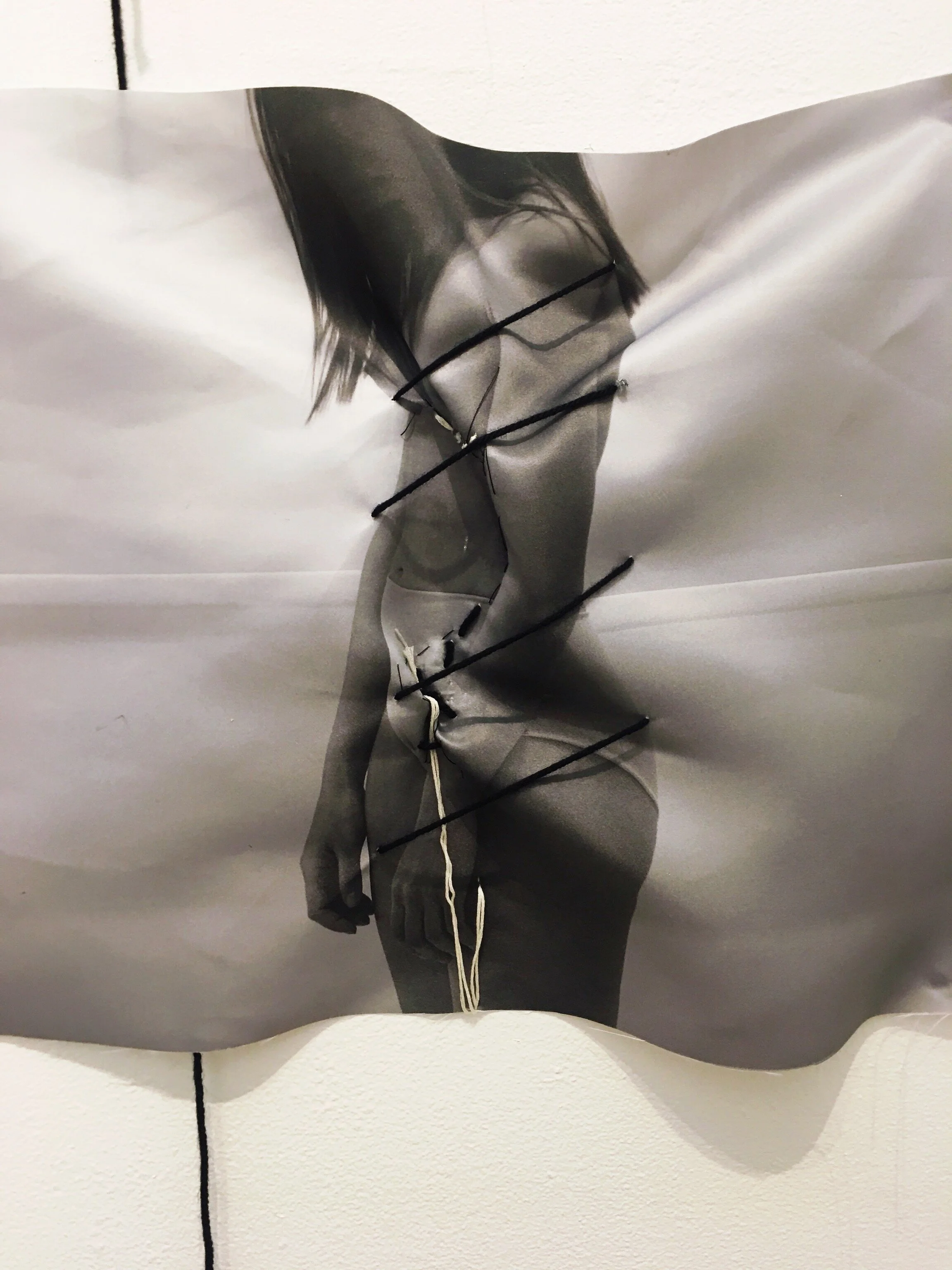
With additive and subtractive processes that portray elements of urgency in the explorations of suffering in all forms, I pursue to explore the psychological and mental abuse of women in domestic households and war-zones. I am interested in the reduction of forms to represent the psychology of the crowd and the complexities of the figure and the face. I base the themes of my work on personal experiences and memoirs of the deprivation of life in a very literal and metaphorical manner. The central concept is that abuse can lead to the notion of captivating women as prisoners in their bodies. Real-life photographs allow the viewer to contextualize themselves into a visual narrative of the real and human female body. I narrow down the personas of the photographs into a relentless journey of a torturous system of the subordination of women. Through this, I seek to abolish and even overthrow the “to-be-looked-at-ness” idea of the female body, which is often cited for serving pleasure, glorification, and sexual sensation. Thus, intervening with embroidery on the photographs is one of the main features of this project.
The paintings evoked in this project are in conversation with the photographs, often inspired by the sitters, or by the setting of the image. In a painterly manner, I seek to create a level of aggression in the figure to contribute to the information process of the people involved in abuse. In other words, I aim to create a visual history with an on-going narrative by drawing connections to what is going on in the world. Undoubtedly, the modern world offers us the instruments of photography; hence I use photography to my benefit in creating this on-going narrative of abuse. The sculptural, haptic, and gestural figures are intended to create a horrific reality of the subject matter with immersive purposes. The duality between the physical touch and visual observation of my practice classifies an important sarcastic subtext of the entire series. What appears to be haptic, does not necessarily mean that it should or it could be touched—generalizing the notion of the haptic versus the optic I create my concept of tactility in the project mostly to call upon a reclaiming of the female body from the consequence of abuse. I do not depict the female body in terms of beauty or idealization—quite the opposite. The female body is emerged and described outside the depiction of a woman’s identity to maintain a subjectivity that is not objectified through a specific identity. I seek to distinguish the female body between its domestic and public sphere. As a result, in this project, the female body is repositioned in direct relation to universality beyond specific visual clues with the face. Tactility allows the narrative descriptions to be constructed at the moment, outside any preoccupations or prejudices.
All of my work could be translated into political and personal interpretations. I am a Cyprus bred artist, where the issues of conflict and segregation are still prominent. Thus, it is only natural that my practice revolves around issues that are projecting and impacting our everyday lives – one way or another. I am born and bred in an environment where ignorance is not bliss. As a result, I owe it to my history to present unrelenting, eloquent, and provocative explorations of the construction of the contemporary world, with its political, economic, and social implications. Conclusively, my current project draws encouragement from many different artists and writers. Anselm Kiefer, in terms of the materials, has given me a particular understanding of the perception of how ordinary things can be explored to create an unconventional surface and create a spatial inventiveness of my concept of haptic. As a result, his roots being a post-World War 2 artist, have enabled me to visualize my work in a political context. Leon Golub has worked efficiently in allowing me to understand the specificity needed in my figurative paintings. Lucian Freud was the catalyst in my understanding of portraiture and the obligation of the artist while executing the figure. Through his autobiography (the self-portraits series), I have come to understand the importance of a narrative in art-making. Cindy Sherman, a prominent photographer, has introduced me to the feminist struggle of overthrowing the male gaze with specific iconographies in her work. About Sherman, I cannot neglect the impact on my work by the famous art critic Hal Foster in the article “Obscene, Abject, Traumatic” (1996). By analyzing Sherman’s work, Foster introduced me to the critical correlation of psychology and feminism: “female subjects [are] self-surveyed, not in phenomenological reflexivity, …but in psychological estrangement.”[2] Therefore, speculating my influences, there is one vital point to be made: the language and subject matter of my project are constructed by narratives that are psychologically, socially, historically, and politically registered in histories and contemporary cultures.
With respect to the survivors of mental and physical abuse, it is with a great delicacy that I wish to bring forward a matter as such. No one drives solo on this journey - whether you are a man or a woman. Torment, agony, and struggle are two-fold, whether you are a victim or the third-person looking outside the window.
[1] The term male gaze was coined by Laura Mulvey, a feminist film critic in 1975; it describes how women are viewed and how each shot of a woman in the film was from the viewpoint of the male director. Female appearances, therefore, are driven by male desires and directives
[2] Foster Hal, “Obscene, Abject, Traumatic,” October 78 (1996), p. 110


Vivamus pellentesque vitae neque at vestibulum. Donec efficitur mollis dui vel pharetra.