Who Gets to Belong? /// Jason Arday and the Ethics of Punishment
A few weeks ago, if you had searched for Jason Arday, you would have seen a story of remarkable success. A professor of Sociology of Education at the University of Cambridge. Appointed in 2023, aged 37, he instantly became known as one of the few Black person to hold a professorship at the university. His biography was something we (as young wannabe academics) see and admire. He, himself, had spoken publicly about being autistic and non-verbal as a child, learning to read and write relatively late, before eventually reaching one of the most prestigious universities in the world.
It was the kind of story institutions like Cambridge understandably like to tell. Or sell. Here was evidence, seemingly, that the doors of one of Britain’s oldest elite institutions could open to somebody whose path looked very different from the traditional image of a Cambridge professor.
Then things changed.
There were serious allegations emerging concerning plagiarism in Arday’s doctoral thesis and published research. Other claims he had made about his academic, athletic and personal history were questioned. Journalists began investigating his biography. Former schoolmates were contacted. There was public outcry. His publications and CV were scrutinised. Cambridge came under increasing pressure over how he had been recruited.
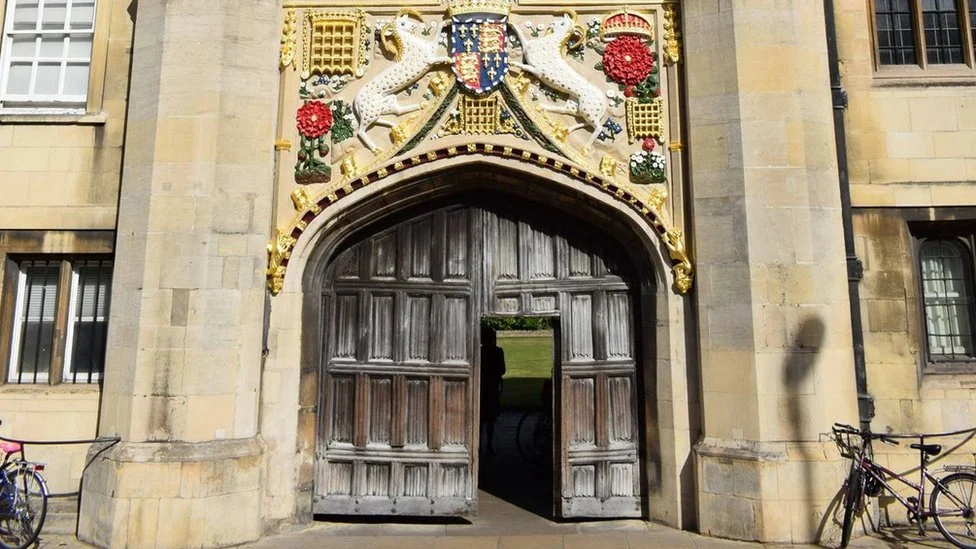
Arday denied plagiarism but eventually resigned from Cambridge. The university subsequently announced an independent investigation into the circumstances surrounding his appointment.
On 14 August 2026, Jason Arday was found dead at his home in south London. He was 41. Police described his death as unexpected but not suspicious. I am writing this on the 15th of August 2026, and we still have no confirmed cause of death.
The simplistic side of this story is that an academic appears to have repeatedly misrepresented aspects of his biography, serious questions were raised about his research, with journalists exposing such inconsistencies, and an institution apparently failing to identify them before appointing him. I don’t intend to minimise that dimension of the story.
I have spent years trying to survive the academic world alongside a full-time job and an artistic practice, navigating its bureaucracy, unanswered emails, toxicity, missed opportunities, and the constant search for someone willing to protect or advocate for you within a system that was never quite built for people like me. Perhaps because of that, I do not take academic integrity lightly. I know that research depends upon trust. Upon hard-work. We learn early on in our academic years that sources ought to be acknowledged, that evidence should not by any means be fabricated, that qualifications are genuine and that we as researchers remain truthful about how knowledge has been produced. When somebody holds a powerful academic position, students, researchers and institutions rely upon the legitimacy conferred by that position. That there needs to be transparency, in any or all ways. If that trust has been violated, there should be consequences.
So yes. I agree that they should investigate the thesis. The publications. The resume.
But the investigation for me has been highly problematic. And this is because accountability is one question. What society decides someone’s wrongdoing represents is another.
Somewhere between the allegations of plagiarism and Arday’s resignation, this stopped being a story about one academic.
It became a story about race. It became a story about “wokeness” (I cant do this anymore, sorry). It became a story about diversity. And eventually it became a story about who deserves to fit at the university. One of the things that disturbed me most about the coverage was the language through which Arday began to be described. The Telegraph referred to him as Cambridge’s “diversity poster boy”. The Sun (who takes the Sun seriously at the end is another story perhaps belonging in another piece of writing) situated the affair within the familiar vocabulary of “woke Cambridge”.
These phrases might appear trivial. But they certainly are not. Imagine removing them. Imagine another heading: Cambridge professor accused of plagiarism. That sentence tells us what the allegation is. Now put them back. Cambridge's diversity poster boy accused of plagiarism. Something has changed. Suddenly diversity itself has entered the dock.
The implication available to the reader is no longer simply that Cambridge appointed an academic whose work should have been scrutinised more carefully. It becomes possible to understand the scandal as evidence that Cambridge’s commitment to diversity allowed someone insufficiently qualified to enter the institution.
The words diversity, woke, merit and standards begin circulating around one another.
But plagiarism is not “woke.” Lying on a CV is not “woke.” Gaps in recruitment is not “woke”. If Cambridge lowered academic standards specifically because it wanted to appoint a Black professor, that would be an important story. But it would need to be demonstrated, not insinuated through a vocabulary already saturated with culture-war politics.
This is particularly important because “woke” is not politically innocent language. Bart Cammaerts has examined Britain’s “anti-woke culture war,” (see here: https://journals.sagepub.com/doi/10.1177/09579265221095407) arguing that a discourse with roots in more extreme right-wing political formations has migrated into mainstream conservative politics and right-wing media. Within this discourse, anti-racism, feminism and other struggles for social justice can be reframed as excessive, dangerous or corrosive to established institutions. “Woke,” in other words, does something remarkably efficient. It creates an enemy.
This is how I started thinking of Carl Schmitt as I was driving talking to a friend about this story.
For the sake of my point, Schmitt says that one of the fundamental distinctions of political life is that between friend and enemy. Not in the traditional sense of liking and disliking people. The political enemy is the figure against whom a collective can define itself. There is an “us” partly because we can identify a “them”. Cammaerts himself draws upon this Schmittian distinction when analysing the anti-woke culture war.
Think about the oppositions gradually surrounding the Arday affair: merit / diversity, standards / DEI, real academics / diversity hires, traditional Cambridge / woke Cambridge.
Once the scandal is organised through these oppositions, Arday becomes the tool for something much bigger than establishing whether he plagiarised. He is the evidence. His individual alleged wrongdoing can be made to demonstrate the corruption of an entire political project. And I think at this point onwards, or even before that, race becomes impossible to ignore.
I am not arguing that Arday should not have been investigated because he was Black. Nor am I arguing that everyone who investigated him was racist. Both positions would be simplistic.
The more interesting question is why should the misconduct of one Black professor tell us anything about whether diversity itself works?
If a white Cambridge professor plagiarises, we might question that professor’s integrity. We might question the appointment committee. We might question Cambridge. What we are unlikely to ask is whether white inclusion has failed.
Whiteness rarely needs to announce itself in this way. Within historically white institutions, it can remain the unmarked position: the thing that does not require explanation.
Arday, however, had already been made visible through race. He wasn’t simply Professor Jason Arday. He was repeatedly used for and presented as Cambridge’s youngest Black professor. This produces a strange representational burden. And of course when the appointment succeeds we would have this. Look how far Cambridge has come. When the appointment collapses it shifts. Look what diversity has done to Cambridge.
The same person becomes evidence for two completely opposed political stories. This is why the phrase “diversity poster boy” is the bread and butter of all this. A poster boy de-individualised. A poster boy represents something.
And universities increasingly need people who represent things. The first woman to achieve something, the youngest person to reach a particular position, the first Black professor, the refugee who became the academic, the working-class student who reached Oxford or Cambridge.
These stories can be genuinely important. Representation matters precisely because exclusion has been real. But representation can also become institutional currency.
Sara Ahmed has written extensively about how institutions can perform diversity, producing diversity statements, committees, policies and visible success stories while the deeper structures of the institution remain remarkably resistant to change. An institution can therefore become more diverse in appearance without necessarily becoming less exclusionary in structure. This produces what we might think of as a form of inclusive exclusion.
You are allowed inside. You may even become extraordinarily visible inside. But you remain marked by the category through which your inclusion has been understood.
Arday belonged to Cambridge but he could simultaneously be made to signify Cambridge’s diversity. That is not quite the same thing as simply belonging. AND when the symbolic minority subject fails, their failure can immediately be returned to the category that made them visible. The individual is no longer permitted to fail individually.
Arday doesn’t merely fail. Diversity fails through Arday.
There is another uncomfortable part of this story, however, because institutions cannot simply disappear once the individual has been exposed.
One must say it. Jason Arday did not appoint Jason Arday Professor at Cambridge. Someone recruited him. Someone read his application. Someone evaluated his research. Someone examined his publication record. Someone took references. Someone decided that he satisfied the criteria for one of the most prestigious academic positions in Britain.Someone, and a committee. With names. And faces. This does not absolve Arday of responsibility for anything he misrepresented. Personal deception and institutional failure can coexist.
However, Cambridge benefited from the extraordinary story surrounding his appointment. His trajectory generated international coverage and became associated with the image of a changing university. Of a diversified institution. If the institution was willing to benefit symbolically from that biography, it also has a responsibility to explain how the academic credentials behind it were assessed. This is where I become uncomfortable with the tendency of institutions to individualise failure. When the exceptional appointment succeeds, the institution accumulates prestige. When it fails, suddenly the story becomes a story of how he fooled us. And perhaps he did.
But the question remain. How?
And this leads to the part of the story that troubles me most: the ethics of punishment.
A friend said to me recently that public shame is a reliable method of discouraging aspiring cheaters. Initially, this sounds reasonable. If people know that plagiarism might destroy their professional reputation, perhaps they will think twice before doing it. Academic standards mean little if violating them has no consequences. But I am uncomfortable with the logic. Because what exactly should be the price of academic dishonesty? Loss of a position? Retraction of publications? Damage to professional reputation? Public disclosure of misconduct? These can all be understood as consequences directly connected to an offence.
But where does accountability end?
Universities can investigate misconduct. Journals can retract papers. Institutions can dismiss people. Journalists can expose wrongdoing. None of these things necessarily requires transforming someone into a public spectacle. Public shame does something additional, because it creates an example.
There is an important ethical distinction between making wrongdoing visible and making the wrongdoer completely visible. The first concerns the offence. The second can consume the person.
If public humiliation is justified because it might prevent somebody else from cheating, then the person being punished acquires another social function. Their suffering becomes useful. They are no longer experiencing consequences simply because of what they themselves have done. They become a warning addressed to everyone else. Look at him. Do not become him. And here Schmitt’s friend/enemy distinction returns in another form. Public punishment is not about identifying wrongdoing. It can help a community establish its own moral boundaries. Oh and those moral boundaries. The disgraced academic becomes the figure against whom the legitimate academic community recognises itself, between the honest vs. dishonest, the scholar vs. the fraud, the merit vs. the undeserved advancement, the us vs. the him
The person who violates the rules is expelled symbolically from the community of legitimate scholars, and through that expulsion the rest of the community can reassure itself about its own legitimacy.
But once someone has been constituted as the enemy, a difficult question appears. What determines when the punishment has become enough?
There must surely be a difference between saying. You cannot continue to occupy this position because you violated its standards and saying… there should be nowhere left for you to exist beyond what you have done.
That difference is where I locate the ethics of punishment. Accountability should have an object. The wrongdoing. It should have procedures. It should have consequences. And, crucially, it should have limits.
Without limits, punishment can cease to be corrective or protective and become something closer to social annihilation, not necessarily physical annihilation, but the destruction of the possibility of an identity beyond the offence. Employment disappears. Professional identity collapses. Reputation becomes irretrievable. Community withdraws. Eventually, the person’s name becomes synonymous with the worst thing they have done.
The question changes. What did this person do? And it becomes What kind of person is this? and eventually the question….. Was anything about this person ever real?
This distinction becomes particularly important in Arday’s case because the scrutiny moved far beyond his research. His childhood was used as evidence. His athletic achievements became evidence. His charitable activities became evidence. Former schoolmates were reportedly contacted about whether he had really been non-verbal as a child.
Some of this may constitute legitimate journalism. If someone has built a public career partly around biographical claims that are false, journalists have legitimate reasons to investigate them.
But taken together, we are still entitled to ask: At what point are we no longer investigating misconduct and instead investigating the entire human being?
Social media intensifies this process enormously. Thousands of strangers can become amateur detectives, prosecutors and judges. Every photograph, interview, inconsistency and memory becomes another fragment of evidence. Punishment becomes participatory. And there can be a disturbing pleasure in the spectacular fall: the satisfaction of discovering another lie, another inconsistency, another piece of the person that can be exposed as fraudulent.
The objective subtly shifts from establishing that somebody did something dishonest to establishing that everything about them was dishonest.
The person becomes the scandal. In Arday’ s case, this process acquired yet another dimension because he had already been transformed into a political symbol.
He was not publicly disgraced simply as an academic accused of plagiarism. Through descriptions such as “diversity poster boy” and the invocation of “woke Cambridge,” his individual wrongdoing became attached to arguments about race, DEI, merit and institutional decline. He therefore became useful twice. First, his extraordinary trajectory could signify the success of greater inclusion. Then his downfall could signify its failure. And perhaps this is where the politics of race and the ethics of punishment become inseparable. That does not mean Arday deserved less scrutiny because he was Black. Equality cannot mean exemption from accountability. But equality should surely also mean that an individual’s wrongdoing remains, as far as possible, individual wrongdoing.
A Black professor should be capable of being dishonest without Black academic advancement being placed on trial. A Black professor should be capable of being badly appointed without diversity itself becoming the defendant. And a Black professor should be capable of failing without that failure being recruited as evidence that people like him were allowed too far inside the institution. Arday’s death now hangs over all these questions.
We do not currently know its cause. It would be irresponsible to describe it as suicide without evidence, just as it would be irresponsible to claim that media scrutiny caused his death. His death does not make plagiarism acceptable. It does not make dishonesty irrelevant. It does not retrospectively transform legitimate investigation into persecution. But neither does wrongdoing make unlimited humiliation ethically defensible. Both propositions have to survive simultaneously.
And perhaps we do not need to know how Jason Arday died to ask the ethical question his story leaves behind. What should a human being be required to pay for wrongdoing?
And who decides when that debt has been paid? This is what troubles me about the deterrence argument. If the purpose of punishment is simply to frighten the next potential offender, there is always an incentive to make punishment more spectacular. The more terrible the consequences appear, the more effective the warning supposedly becomes.
But a humane ethics of punishment must surely contain something else, the possibility of an after. There has to be some conceptual space in which the person exists after accountability. After the investigation. After the retraction. After losing the position. After disgrace.
Otherwise punishment ceases to address something a person has done and begins permanently to determine what that person is. You plagiarised becomes you are a plagiarist. You lied becomes you are a liar. You committed fraud becomes you are a fraud. Eventually the noun consumes the human being.
The enemy is no longer simply somebody who has done something wrong. The enemy is positioned outside the moral community of the “we”. And once that transformation has occurred, rehabilitation becomes difficult because allowing the enemy back inside threatens the boundary that their exclusion helped produce. A functioning ethics of punishment should resist precisely this transformation.
It should be possible to condemn an action without demanding the permanent social annihilation of the actor. It should be possible to expose wrongdoing without requiring that every part of someone’s existence be exposed with it. And it should be possible to believe simultaneously in academic standards and in the proposition that human beings remain more than their worst acts.
Perhaps, then, underneath everything else, the Jason Arday affair is a story about belonging.
Who belongs inside Cambridge? Whose presence becomes a story? Whose qualifications are presumed and whose become politically significant? Who is permitted to represent only themselves? Who, when they fail, is made to represent an entire category of people? And perhaps we should add one final question:
When somebody has been expelled from the moral community, are they ever permitted to belong again?
Arday may have violated the conditions of academic belonging through his own actions. Cambridge may have failed in determining whether those conditions had been satisfied. An institution committed to diversity may have transformed an individual into symbolic evidence of its own progress. An anti-DEI media discourse could then reverse that symbolism and transform the same individual into evidence that inclusion itself had gone too far. And public punishment could transform the individual once more, from a person who had done something wrong into a person defined entirely by wrongdoing.
These things do not cancel one another out. They expose one another. The allegations concerning Arday’s work are important and deserved investigation. But Arday is no longer here to answer them, and I am uncomfortable turning his death into an opportunity for a final judgement about who he was.
The questions that remain are larger than him. Cambridge must answer for how it recruits, verifies and transforms individuals into symbols of institutional progress. The media must be questioned about where legitimate investigation ends and public spectacle begins. And we should ask why the alleged misconduct of one Black academic became a referendum on diversity in the first place.
“Diversity poster boy,” “woke Cambridge,” DEI, merit, standards. These are not descriptions of plagiarism. They make race part of the explanatory structure of the scandal. The question shifts from “How did Cambridge appoint this particular person?” to “What happens when institutions prioritise diversity?”
That shift matters. Historically white institutions never require whiteness to account for itself. Yet the minoritised subject can be required to carry a representational burden when their success becomes evidence that inclusion works and their failure, evidence that it has gone too far. Arday became a representative twice.
And this is where race meets the ethics of punishment. Through public shame, the individual can become an example, the figure against whom the legitimate community defines itself. So I am keeping this uncomfortable question. Who constitutes the academic “we,” and who is transformed into the “them”?
Arday’s death does not answer these questions, and we should not speculate about its cause. But we do not need to establish that public humiliation caused his death to ask whether humiliation has ethical limits. Accountability should have consequences. But surely it should also contain the possibility of an after, a space in which a human being can exist beyond the worst thing they have done. Perhaps that is what this story ultimately asks of us. Who gets to belong, who gets to fail without their entire group being placed on trial, and whether our idea of justice still leaves room for a human being after punishment.